The short answer: the Mountain and Sea Classics were written differently
The Shanhaijing (山海經, Classic of Mountains and Seas) is not written in a single style. The surviving text divides into the five books of the Classic of Mountains and the thirteen books of the Classic of Seas. The Classic of Mountains follows mountain ranges, listing mountains and rivers in order with fixed phrases. The Classic of Seas deals mainly with foreign peoples of distant lands, myths and clan genealogies. This article is the first in a three-part series.
This installment covers the formal differences between the two halves, Liu Xin's (劉歆) editing and Guo Pu's (郭璞) commentary, and the sentence structure of the original Southern Mountain Classic (南山經) and Western Mountain Classic (西山經). The individual Sea books are left for later installments. The original text can be read book by book on Chinese Wikisource (維基文庫). Once the two halves are told apart, the divided verdicts on the book can be sorted by which half each one addresses.
How the book divides: five Wuzang Shanjing books and thirteen Sea books
Chinese Wikipedia (維基百科) describes the current edition this way: “今本《山海經》凡三萬一千餘字,分為《五藏山經》(簡稱《山經》)五篇與《海經》十三篇”. In other words, the present Shanhaijing runs to just over 31,000 characters. It divides into the five books of the Wuzang Shanjing (五藏山經, Mountain Classics of the Five Treasuries) and the thirteen books of the Haijing (海經, Classic of Seas). The Wuzang Shanjing is called the Shanjing, or Classic of Mountains, for short. This article uses that name from here on.
The same entry breaks the thirteen Sea books down further. There are four books of the Haiwai Jing (海外經, Classic of Regions Beyond the Seas) and four of the Hainei Jing (海內經, Classic of Regions Within the Seas). Then come four of the Dahuang Jing (大荒經, Classic of the Great Wilderness) and one more Hainei Jing. Note that the name Hainei Jing covers both the group of four and the single book. Nipponica, a Japanese encyclopedia, divides the same work into five parts in its entry on Kotobank (コトバンク): the Wuzang Shanjing, the Haiwai Sijing, the Hainei Sijing, the Dahuang Sijing and the Hainei Jing.
The two descriptions do not count different books. Counted book by book, the work arguably has five plus thirteen; counted by group, it has five parts. The numbers look different, but they can be read as the same structure divided into different units. Any statement about how many books the Shanhaijing contains should first make clear which unit it uses.
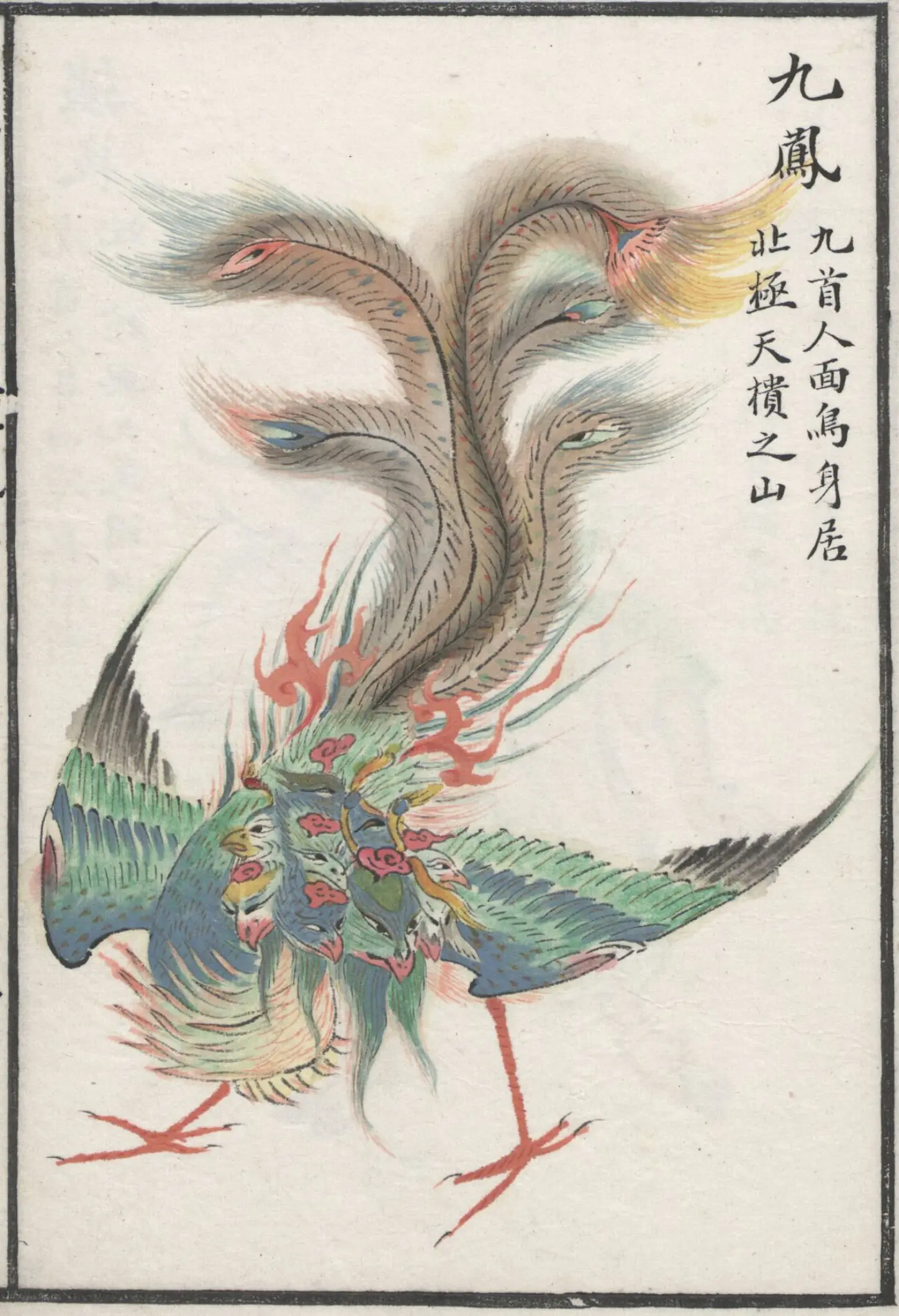
The two halves also differ in content. Chinese Wikipedia says the Classic of Mountains is organized “以山脈為綱”, using mountain ranges as its framework. It divides the land into five regions: south, west, north, east and center. Within them it records mountains and rivers, routes and distances, products and sacrifices in a fairly rigorous system. The Classic of Seas, by contrast, deals mainly with foreign peoples of distant lands, myths and legends, and clan genealogies. According to the entry, many scholars regard the Sea text as “據圖為文”, that is, writing based on old illustrations. Two different modes of writing thus coexist within one book.
When was it written? The Siku Quanshu abstract and Japanese encyclopedias
The catalogue abstract in the Siku Quanshu (四庫全書) dates the book by the names that appear in it. It points out that the text mentions Xiahou Qi (夏后啟) and King Wen of Zhou. It also contains Qin-Han place names such as Changsha (長沙) and Xiangjun (象郡). On that basis the abstract concludes: “斷不作於三代以上,殆周、秦間人所述”. In other words, the book was certainly not written before the Three Dynasties of Xia, Shang and Zhou. It was probably composed by someone living between the Zhou and the Qin.
The abstract goes further. The same passage suggests that later lovers of the strange added to the text: “後來好異者又附益之歟”. The abstract, it seems, does not treat the book as the work of one author completed at one time.
Japanese encyclopedias take a similar view. The Heibonsha World Encyclopedia, on Kotobank, holds that the first five books, the Wuzang Shanjing, probably took shape in the Warring States period. It surmises that the remaining parts were added in stages during the Qin and Han, and notes that the later the addition, the stronger its fantastical elements. Nipponica places the book's formation probably before the 2nd century.
Both sets of sources treat the Shanhaijing as a book that grew by accretion. The World Encyclopedia adds a sequence: the Wuzang Shanjing came first, and the rest was attached later. This view lines up with the division in content between the Mountain and Sea Classics described above. It also shows that differences in form are discussed together with differences in date.
Liu Xin's edition and the 18 books of the Memorial Presenting the Shanhaijing
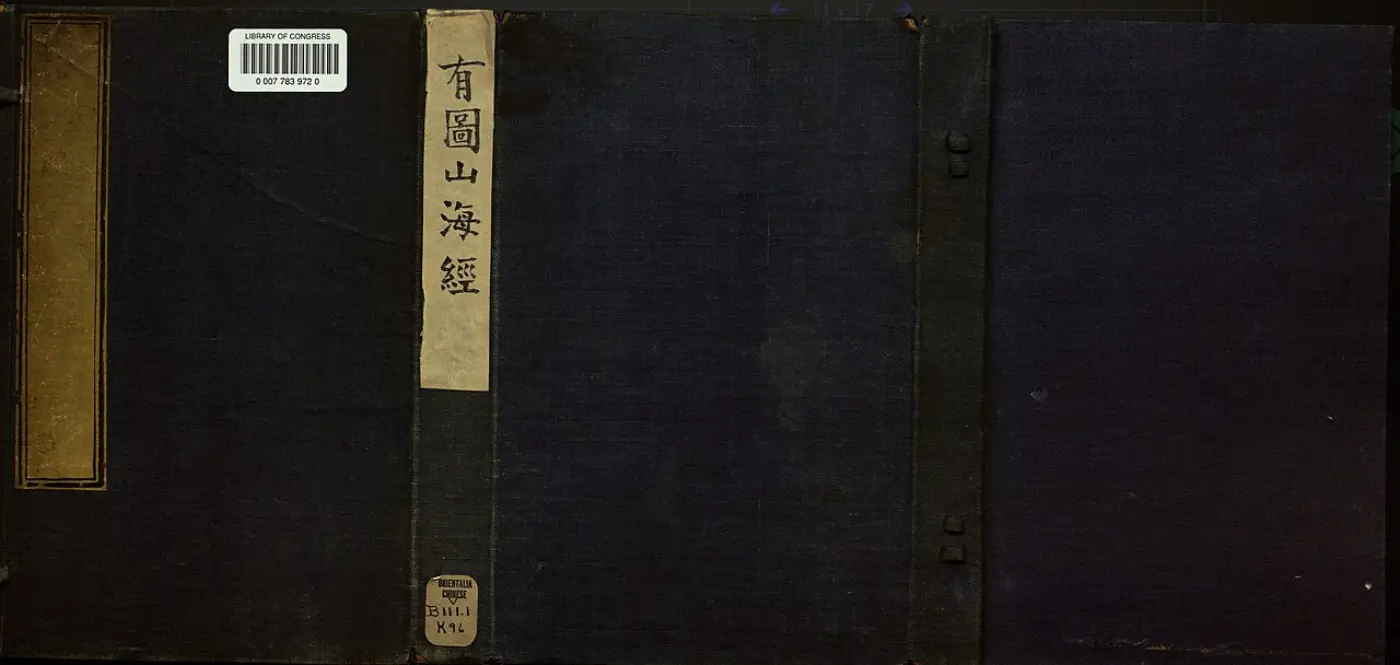
The Siku Quanshu abstract introduces its edition as “《山海經》十六卷,晉郭璞注。”: a 16-juan edition with commentary by Guo Pu of the Jin dynasty. It also mentions the text at the head of the book: “首有劉秀校上奏稱伯益所作”. At the front, that is, stands a memorial Liu Xiu (劉秀) submitted with his collated text, naming Boyi (伯益) as the author. Liu Xiu is another name for Liu Xin.
Liu Xin was the son of Liu Xiang (劉向) of the late Western Han (西漢). According to Chinese Wikipedia, father and son systematically arranged and collated the book: “父子系統整理校訂,合為十八篇,奠定後世傳本之基礎”. They combined the material into 18 books, and their arrangement became the basis of later editions.
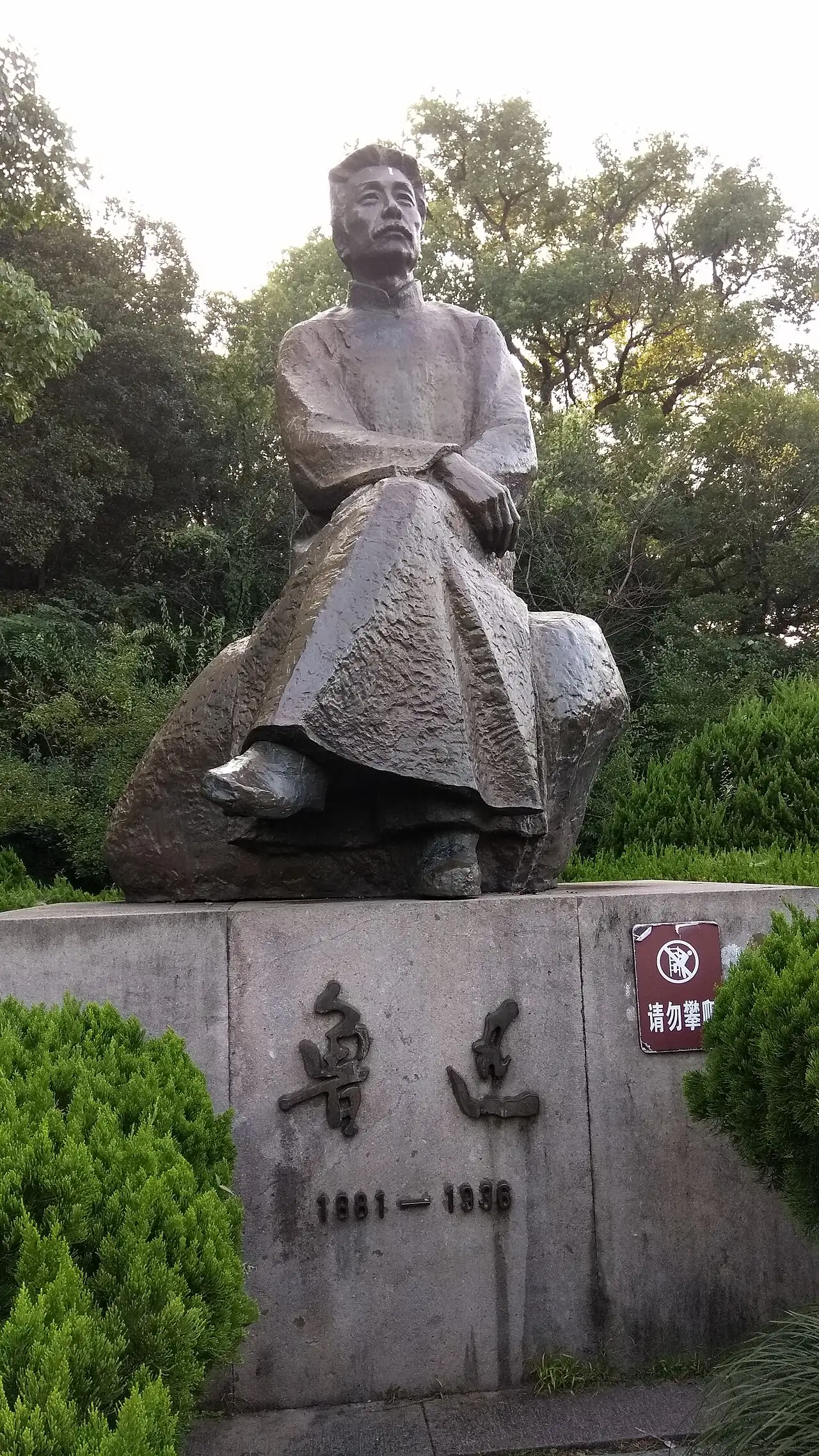
Lu Xun (魯迅) quotes Liu Xin's Memorial Presenting the Shanhaijing (上山海經表) in chapter 2 of his Brief History of Chinese Fiction (中國小說史略). The quoted line reads: “禹別九州,任土作貢,而益等類物善惡,著《山海經》”. In other words, Yu (禹) divided the Nine Provinces and set tribute according to the land. Yi (益) and others then classified things as good or bad and composed the Shanhaijing. The memorial thus places the book's origin in the age of Yu and Yi.
The Siku Quanshu abstract points out a discrepancy in the number of books. Liu Xiu's memorial gives 18, while the bibliographic treatise of the Book of Han (漢書) gives 13. In the abstract's words, “與漢志稱十三篇者不合”. The abstract reports the claim that Boyi wrote the book, yet judges from its place names that it dates from between the Zhou and the Qin. Here the traditional claim of ancient origin and textual scholarship give different answers. The 18-book structure read today can likewise be seen as the result of Liu Xiang and Liu Xin's arrangement.

Guo Pu's commentary: juan counts and lost illustrations
Guo Pu lived under the Eastern Jin (東晉); he was born in 276 and died in 324. The Kotobank entry describes the current text as an 18-juan edition with Guo Pu's commentary. The Siku Quanshu abstract, however, presents the same Guo Pu edition as 16 juan. The two sources give different counts.
The abstract also records the count in older catalogues: “隋、唐二志皆云二十三卷,今本仍少五卷,疑後人併其卷帙以就”. The Sui and Tang treatises both list 23 juan, so the current edition is five juan short. The abstract suspects that later editors merged some juan.
The abstract also mentions Guo Pu's Illustrated Eulogies on the Shanhaijing (山海經圖讚), listed at 2 juan in the Sui and Tang treatises. Of the illustrations, however, it says: “其圖則宋志已不著錄,知久佚矣”. The Song treatise no longer listed them, so they had evidently been lost long before.
The same Guo Pu edition is thus recorded as 16, 18 and 23 juan, and the abstract itself suspects merged juan. Judging an edition's contents from its juan count alone is clearly difficult. Recall, too, the view that the Sea text was written from illustrations. The early loss of the illustrations is worth keeping in mind when reading the Classic of Seas.
The first entry of the Southern Mountain Classic: Que Mountain (䧿山) and Zhaoyao Mountain (招搖之山)
The Southern Mountain Classic opens with this sentence: “南山經之首曰䧿山。其首曰招搖之山,臨於西海之上”. The first range of the Southern Mountain Classic is called Que Mountain (䧿山). Its first mountain is Zhaoyao Mountain (招搖之山), which overlooks the Western Sea. The character “首” (first) appears twice in this opening. The first instance refers to the first range of the Southern Mountain Classic. The second refers to the first mountain of that range. Separating these two levels shows that the Classic of Mountains groups its mountains by range.
Chinese Wikipedia sets out the order the Classic of Mountains follows. Each range proceeds from its first mountain in the form “又某向若干里曰某山”. That is: go so many li further in a given direction, and there is such-and-such a mountain. Under each mountain, the phrase “某水出焉” records where a river rises. The direction it flows and the river, lake or sea it enters follow.
What each mountain produces also fits a fixed template. The Southern Mountain Classic has the line “其名曰迷穀,佩之不迷”: its name is migu (迷穀), and whoever wears it will not lose the way. Animals are introduced with formulas like “有獸焉,其狀如禺”: "there is a beast here whose shape is like…". Recording name, appearance and use in the same order can be seen as a way of slotting unfamiliar things into the cells of a list.
Each range closes with a summary sentence: “凡䧿山之首,自招搖之山,以至箕尾之山,凡十山,二千九百五十里。其神狀皆鳥身而龍首”. From Zhaoyao Mountain to Jiwei Mountain (箕尾之山) there are 10 mountains in all, spanning 2,950 li. Their gods all have the body of a bird and the head of a dragon. The Southern Mountain Classic as a whole ends with “右南經之山志,大小凡四十山,萬六千三百八十里。”: 40 mountains large and small, totaling 16,380 li. Because the gods' appearance is attached to the totals, the range can be seen as both a unit of distance and a unit for grouping gods.

The Queen Mother of the West in the Western Mountain Classic and the ‘其狀如’ formula
The Western Mountain Classic names Jade Mountain (玉山) as the dwelling of the Queen Mother of the West (西王母). The text reads: “是西王母所居也。西王母其狀如人,豹尾虎齒而善嘯,蓬髪戴勝”. The Queen Mother looks like a human, with a leopard's tail and a tiger's teeth, and she is good at whistling. Her hair is wild and unkempt, and she wears a sheng (勝) headdress.
The entry also gives her office: “是司天之厲及五殘。有獸焉,其狀如犬而豹文”. She is in charge of heaven's calamities and the Five Destructions (五殘). Right after this comes a beast that looks like a dog with leopard markings. Her description opens with “其狀如人”, the same template as the animal entry's “其狀如犬”.
This arrangement shows that the Classic of Mountains treats gods and animals in entries of the same form. In chapter 2 of his Brief History of Chinese Fiction, Lu Xun wrote: “其最為世間所知,常引為故實者,有昆侖山與西王母”. In other words, the best-known parts, most often cited as allusions, are Mount Kunlun (昆侖山) and the Queen Mother of the West. Yet in the original text, even this famous figure is just one entry alongside the animals. Seeing where she sits in the text, readers can treat her as part of the Classic of Mountains' catalogue rather than a free-standing myth.
The Third Western Mountain Classic (西次三經), a section of the Western Mountain Classic, also ends with a summary. It counts 23 mountains spanning 6,744 li, from Chongwu Mountain (崇吾之山) to Yiwang Mountain (翼望之山). The text continues “其神狀皆羊身人面”: their gods all have the body of a sheep and a human face. The Western Mountain Classic as a whole ends with “右西經之山,凡七十七山,一萬七千五百一十七里。”. The Western Mountain Classic repeats the Southern Mountain Classic's way of closing. This is evidence that the whole Classic of Mountains was built on a single template.
Geography or fiction? The verdicts of the Siku Quanshu abstract and Lu Xun
The Siku Quanshu abstract reaches a clear conclusion about the nature of the Shanhaijing. It first cites the established view, “諸家並以爲地理書之冠”: many scholars regarded the book as the foremost work of geography. It then concludes, “覈實定名,實則小說之最古者爾”. Weighed on its merits and named accordingly, the abstract says, it is in fact the oldest work of fiction.
Lu Xun gave it yet another label. He noted that the offerings it prescribes for the gods often include xu (糈), polished rice. This, he argued, fits shamanic practice, and he wrote “蓋古之巫書也”: it was probably an ancient shamanic manual. He added, however, that people of the Qin and Han had also expanded it.
The Britannica entry on Kotobank reads the Wuzang Shanjing as organized around mountain names. For the north and south sides of each mountain, it records products, birds and beasts, spirits and rivers. In places that gives it the character of a geography. But the entry notes much imaginative description drawn from myth and legend, a share that grows in the later books. Chinese Wikipedia reports a study by Tan Qixiang (譚其驤). Of the 447 mountains in the Classic of Mountains, only about 140, fewer than a third, can be located precisely.
Xu Xusheng (徐旭生) regarded the Five Mountain Classics as a fairly reliable geography. But he called the Beyond the Seas, Within the Seas and Great Wilderness books almost entirely hearsay, with little that present-day geography can confirm. Xu's distinction matches the division between the Mountain and Sea Classics discussed above. Tan's figures, on the other hand, show that even the Classic of Mountains has limits as a guide to locations. The labels of fiction, shamanic manual and geography can be seen less as clashing with one another than as judgments that each emphasize a different side of the same book.
| Text or source | What it is | Passages used here | View of the Shanhaijing |
|---|---|---|---|
| Siku Quanshu abstract | The Siku Quanshu's catalogue abstract on the Shanhaijing | Introduction of the 16-juan Guo Pu edition; mismatch between the 18 books in Liu Xiu's memorial and the 13 in the Book of Han treatise; 23 juan in the Sui and Tang treatises | Written by someone between the Zhou and Qin and later expanded; the oldest work of fiction |
| Liu Xin, Memorial Presenting the Shanhaijing | A text by Liu Xin of the late Western Han, quoted in chapter 2 of Lu Xun's Brief History of Chinese Fiction | “禹別九州,任土作貢,而益等類物善惡,著《山海經》” | Yu divided the Nine Provinces, and Yi and others wrote the book |
| Lu Xun, Brief History of Chinese Fiction, chapter 2 | Lu Xun's history of Chinese fiction | Mount Kunlun and the Queen Mother of the West; xu (糈) used in sacrifices | An ancient shamanic manual, expanded by people of the Qin and Han |
| Japanese encyclopedias on Kotobank (Nipponica, Heibonsha World Encyclopedia, Britannica) | Japanese encyclopedia entries | Five-part structure; date of composition; 18-juan edition with commentary by Guo Pu (276–324) | The Wuzang Shanjing came first, and the rest was added in the Qin and Han; imaginative description increases in later books |
| Chinese Wikipedia | Encyclopedia entry reporting the views of Tan Qixiang and Xu Xusheng | Only about 140 of the 447 mountains in the Classic of Mountains can be located; the Classic of Seas is almost entirely hearsay | The Classic of Mountains is close to a geography but has limits in locating places; little in the Classic of Seas can be confirmed geographically |
Related reading: How Bak-saeng's and Han-saeng's Journeys to the Underworld and the Dragon Palace Reveal Kim Si-seup's Thought (3/3) · Why Does the Dead Lady Choe in Yisaeng Gyujang-jeon Return, Only to Leave Again? (2/3)
Summary
The passages examined above show that the Classic of Mountains was written by filling fixed slots. The first mountain of a range, direction and distance, watercourses, plants and animals, totals and the gods' appearance recur in the same order. Even a figure who later became famous, such as the Queen Mother of the West, stays within this framework. In the transmission record, the counts of books and juan differ from source to source: 13 and 18 books, and 16, 18 and 23 juan. Different records, in other words, drew the book's boundaries in different places.
Some questions remain. How should the view that the Classic of Seas was written from illustrations be connected with the record that the illustrations to Guo Pu's eulogies were lost early? And what becomes of the Classic of Mountains' fixed formulas in the Classic of Seas? The next part takes up these questions alongside the original text of the Classic of Seas.