The short answer
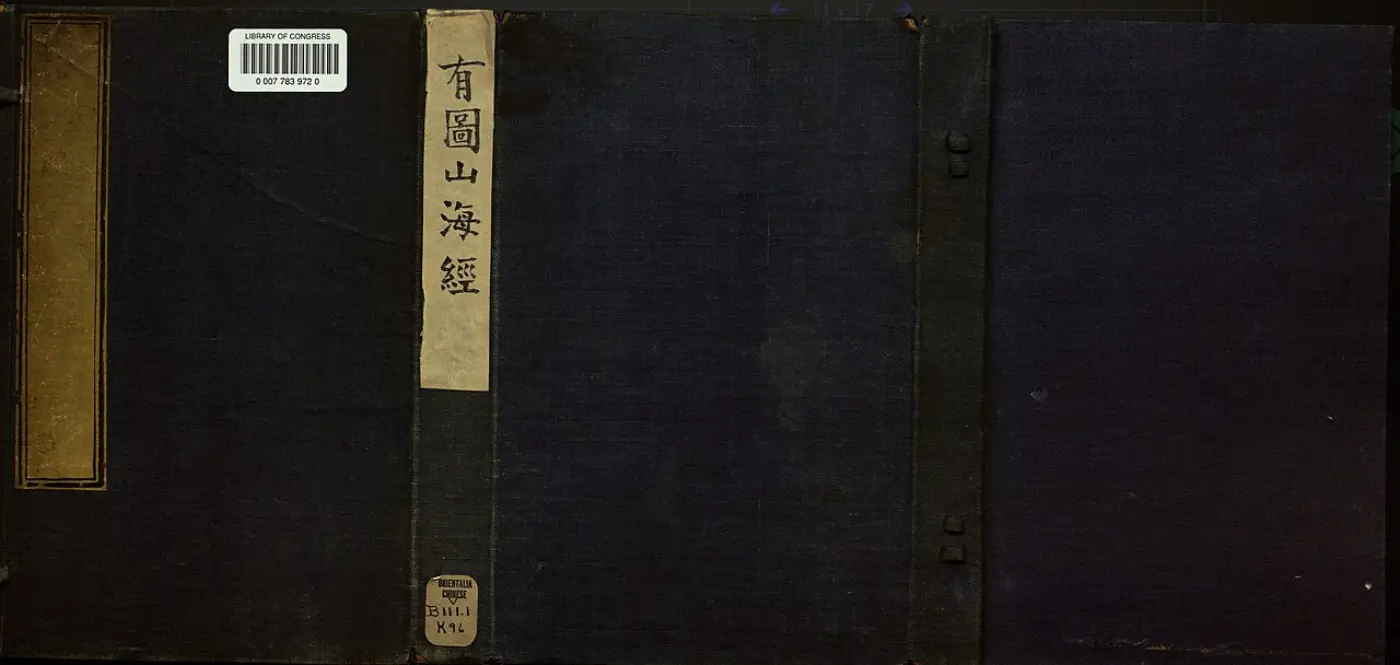
The Joseon entries in the Shanhaijing (山海經, Classic of Mountains and Seas) are hard to treat as direct evidence of where Gojoseon lay. They are better read as clues, and their chapter placement and date have to be examined first. The Hainei Beijing (海內北經) and the Hainei Jing (海內經) locate Joseon by different reference points. The entries on the Country of Gentlemen and Qingqiu in the Haiwai Dongjing (海外東經) record customs and appearance rather than location. This is the third part of a three-part series.
The Encyclopedia of Korean Culture presents the Shanhaijing as an early record of Gojoseon. Yet the same entry says it is impossible to know what period that Joseon reflects. Both statements sit side by side in a single article. This piece covers the original text of three chapters and how they have been used in the debate over Gojoseon's location. It also traces how views of the book changed from the Han dynasty to Lu Xun (魯迅).
According to English Wikipedia, early versions of the Shanhaijing go back as far as the 4th century BCE. The same article says the book took its present form only in the early Western Han. This suggests that writings from several periods may be layered within one book. Keep this in mind before reading the Joseon entries: no single passage can be assumed to speak for the date of the whole book.
The Hainei Beijing: '朝鮮在列陽東' and Yuan Ke's annotations
The Hainei Beijing on Chinese Wikisource contains this passage: "蓋國在鉅燕南,倭北。倭屬燕。朝鮮在列陽東,海北山南。列陽屬燕。" In translation: "The state of Gai lies south of Great Yan and north of Wo. Wo belongs to Yan. Joseon lies east of Lieyang, north of the sea and south of the mountains. Lieyang belongs to Yan."
The passage does not give Joseon a place name of its own. Instead, it gives directions relative to three reference points: Lieyang, the sea and the mountains. But the passage alone does not settle where Lieyang was. It tells us only that Lieyang belonged to Yan. Anyone hoping to fix Joseon's location from it would arguably have to establish Lieyang's position from other evidence first.
Yuan Ke (袁珂), who produced an annotated edition (校注) of the Shanhaijing, questions where the passage sits. The notes on the Wikisource Hainei Beijing page cite his view that nine sections, including '朝鮮在列陽東', should be moved. In his view they belong after the '鉅燕在東北陬' section of the Hainei Dongjing (海內東經). The note reads: "均應移往海內東經「鉅燕在東北陬」之後".
In other words, the chapter that now holds the Joseon entry may not be its original home. Reading Joseon's direction from the compass point in the chapter title alone could mislead readers. Questioning chapter placement belongs to the same line of inquiry as reading the Mountain Classics and the Sea Classics separately. Before asking what the Joseon entry means, one has to ask which chapter it belongs to.
The Hainei Jing: '北海之隅' and the Lelang Commandery note
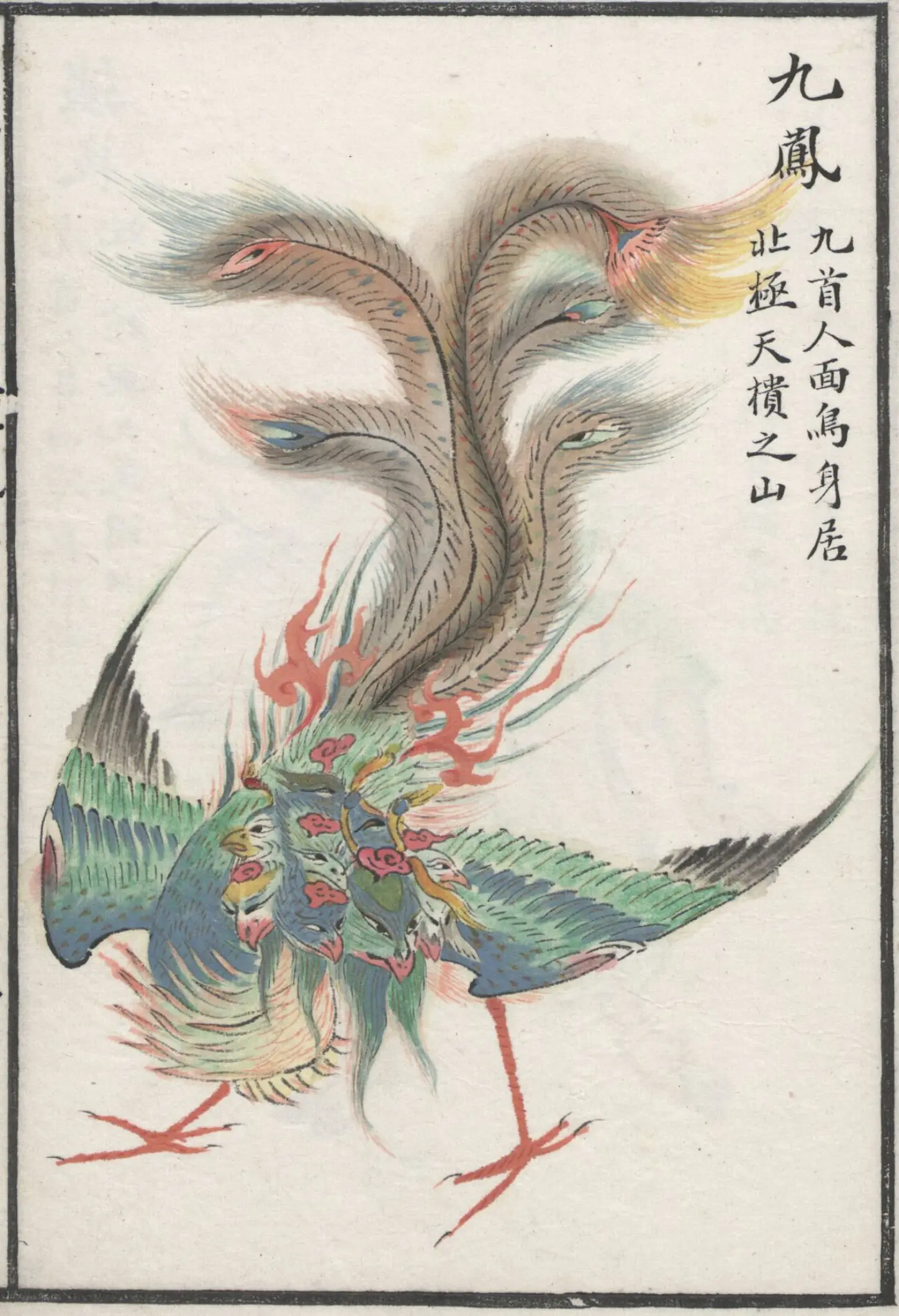
Joseon appears differently in the Hainei Jing. The Wikisource text reads "北海之隅,有國名曰朝鮮": "In a corner of the Northern Sea there is a country called Joseon." Neither Lieyang nor Yan appears here. The only reference point is a single body of water, the Northern Sea.
So the Hainei Beijing puts Joseon north of the sea, while the Hainei Jing puts it in a corner of the Northern Sea. The same book describes Joseon by different reference points. The difference may point to records from different lineages sitting together in the Shanhaijing. Anyone who reads only one passage will miss it.
The commentary on the Hainei Jing glosses this Joseon as "朝鮮今樂浪郡也。": "Joseon is the present-day Lelang Commandery." According to the Encyclopedia of Korean Culture, Joseon County of Lelang Commandery was established in 108 BCE. The Han placed it at the heart of Wiman Joseon after destroying that state.
In light of this, the commentary's "present day" can be read as the time when Lelang Commandery existed. The commentator seems to have read the Joseon of the main text through the administrative name of his own day. There is no basis, however, for assuming that this gloss matches Joseon as it was when the main text was written. The passage shows why main text and commentary must be read separately.
The Haiwai Dongjing: the Country of Gentlemen, Qingqiu and a colophon dated the first year of Jianping
The Haiwai Dongjing contains entries on the Country of Gentlemen (君子國) and the Country of Qingqiu (青丘國). The Country of Gentlemen entry describes its people as "衣冠帶劍": they wear robes and caps and carry swords. It adds "其人好讓不爭。": its people like to yield and do not quarrel. It also mentions a plant called xunhua (薰華草), which blooms in the morning and dies by evening.
The Qingqiu entry says its people eat the five grains and wear silk. It describes the local fox as "其狐四足九尾。": four legs and nine tails. The entry also gives a variant account, "一曰在朝陽北。": another tradition places Qingqiu north of Zhaoyang.
These two entries differ in kind from the Joseon entries. The Joseon entries give directions and reference points. The Country of Gentlemen entry describes how its people behave, and the Qingqiu entry describes food, clothing and an animal's appearance. Even their locations are given relative to the preceding entry, as in '在其北', so these entries arguably make an actual location even harder to pin down.
A colophon closes the Haiwai Dongjing: "建平元年四月丙戌,待詔太常屬臣望校治,侍中光祿勳臣龔、侍中奉車都尉光祿大夫臣秀領主省。" It states that Wang (望) collated the text on the bingxu day of the fourth month of the first year of Jianping. Wang was an attendant awaiting appointment on the staff of the Taichang. Gong (龔), Superintendent of the Palace, and Xiu (秀), Grand Master of the Palace, supervised the work. The colophon shows that the Haiwai Dongjing we read today passed through the hands of official collators. Together with Yuan Ke's argument for moving sections, it suggests that many hands also shaped the arrangement of chapters.

The Encyclopedia of Korean Culture on the Hainei Beijing entry
In its article on Gojoseon, the Encyclopedia of Korean Culture cites the Shanhaijing: "The earliest records of Gojoseon are commonly said to be the Shanhaijing (山海經) and the Guanzi (管子)." The Shanhaijing thus stands at the starting point of Gojoseon studies. For that reason, its Joseon entries are arguably bound to come up again and again in research.
The encyclopedia quotes the Hainei Beijing's entry on Joseon's location in Korean translation. It then adds: "There have been studies that use this entry to identify the location of Gojoseon's early center." It quotes only the sentence about Joseon and Lieyang. In the Wikisource text, however, that sentence is joined to the one about Gai and Wo. Read together, the two sentences suggest that Yan serves as their shared reference point.
According to the encyclopedia, Silhak scholars of the late Joseon period proposed three theories about where Gojoseon's center lay: the Liaoning theory (在遼寧省說), the migration theory (移動說) and the Pyongyang theory (在平壤說). The debate, it says, has continued ever since.
In that debate, the Hainei Beijing entry has served as evidence for locating Gojoseon's early center. But as we have seen, the passage does not fix where Lieyang was. So this one entry arguably cannot decide among the theories. It can feed the debate, but it can hardly settle it.
Dating the Shanhaijing and the Biography of Su Qin in the Shiji
The Encyclopedia of Korean Culture also explains what kind of book the Shanhaijing is. It calls it an ancient Chinese work of geography that collects writings produced in various regions. These writings span the Spring and Autumn period to the Western Han, that is, the 8th to the 1st century BCE. From this the encyclopedia concludes: "Therefore it is impossible to know what period the Joseon mentioned here reflects."
As noted above, English Wikipedia puts the starting point in the 4th century BCE; the encyclopedia puts it in the 8th. The numbers differ, but both agree that the Shanhaijing as we have it took shape over a long span of time. That shared view can be read as the reason the Joseon entries are so hard to date.
The encyclopedia also cites the Biography of Su Qin (蘇秦傳) in the Shiji (史記). It says this text shows that "by the mid-4th century BCE at the latest, people in northern China clearly recognized Joseon as an entity." The sentence sets the latest possible date for awareness of Joseon. It handles dating differently from the Shanhaijing's Joseon entries.
Set side by side, the sources on Joseon pin down dates to different degrees. The Biography of Su Qin gives a "no later than" limit. The Hainei Jing commentary reveals its own date through the name Lelang Commandery. The main text of the Shanhaijing gives no date at all. This is likely why the encyclopedia treats the entry with caution.

From Liu Xin to the Ming and Qing: changing views of the Shanhaijing
Ideas about what kind of book the Shanhaijing is have varied from era to era. According to English Wikipedia, Liu Xiu (劉秀), also known as Liu Xin, of the Western Han believed that Yu the Great and Boyi wrote it. On that view, the lands and countries in the book would naturally read as genuine ancient records.
The same article says that from the Han to the Tang, readers considered the book's contents true and reliable. In the Ming and Qing, they regarded it as a work of fiction. Trust in the same book rose and fell with the times. Most scholars today treat it mainly as a work of geography.
These shifts show that the weight given to the Joseon entries can change too. If the book is a reliable record, its location entries read as statements of fact. If it is fiction, the same entries can be read as imaginary geography. Today's view of it as geography arguably pulls the entries back into the location debate. Still, calling the book geography does not solve the dating problem discussed above.
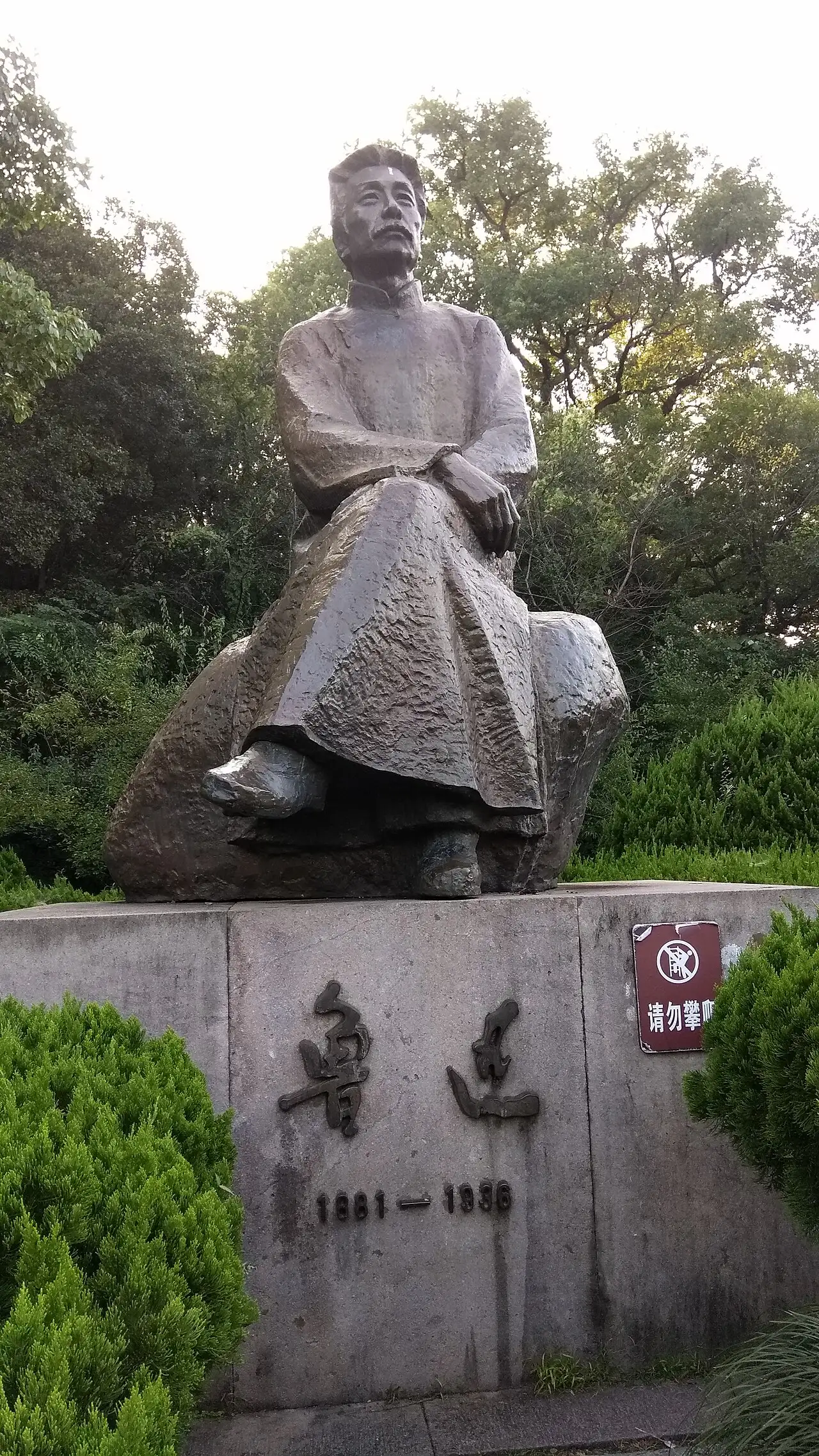
The Shanhaijing in Lecture One of Lu Xun's The Historical Development of Chinese Fiction
Lu Xun discusses the Shanhaijing in the first lecture of The Historical Development of Chinese Fiction (中國小說的歷史的變遷). He is looking for Chinese myth, and he writes: "我們要尋求,只可從古書上得到一點,而這種古書最重要的,便推《山海經》。" In translation: "If we go looking, we can find only a little in ancient books, and the most important of those ancient books is the Shanhaijing."
Lu Xun then points out the book's limits: "不過這書也是無系統的" (this book, too, lacks a system). He names the story of the Queen Mother of the West (西王母) as its most important record and the one most closely tied to later times. In his view, the story "一直流行到唐朝,才被驪山老母奪了位置去。" In other words, it remained popular until the Tang, when the Old Mother of Mount Li (驪山老母) took its place.
Lu Xun reads the Shanhaijing as a wellspring of stories. He traces not the location of places but the path by which a story reaches later generations. From this angle, the Queen Mother of the West takes center stage, not the Joseon entries. Readers remember entirely different passages of the same book, depending on the questions they bring to it.
The encyclopedia and Lu Xun read the book differently on three points. First, they look for different things: the encyclopedia seeks Gojoseon's location and date, while Lu Xun seeks Chinese myth. Second, they focus on different passages: the encyclopedia cites the Hainei Beijing's Joseon entry, and Lu Xun the story of the Queen Mother of the West. Third, they see the book's limits differently: for the encyclopedia its date cannot be known, while for Lu Xun it lacks a system. Both texts, and each chapter of the Shanhaijing, can be read in the original on Chinese Wikisource and the Encyclopedia of Korean Culture website.
| Text | Passage used here | Key content | How it differs from the others |
|---|---|---|---|
| Shanhaijing, Hainei Beijing | The '朝鮮在列陽東' passage | Places Joseon east of Lieyang, north of the sea and south of the mountains; says Lieyang belongs to Yan | Yuan Ke's annotations hold that nine sections, including this passage, should be moved to the Hainei Dongjing |
| Shanhaijing, Hainei Jing | The '北海之隅' passage and its commentary | Says a country called Joseon lies in a corner of the Northern Sea | The commentary glosses Joseon as the present-day Lelang Commandery |
| Shanhaijing, Haiwai Dongjing | The Country of Gentlemen and Qingqiu entries and the closing colophon | Says the people of the Country of Gentlemen yield and do not quarrel, and the foxes of Qingqiu have nine tails | Records customs and appearance rather than location; carries a colophon dated the first year of Jianping |
| Shiji, Biography of Su Qin | The passage cited by the Encyclopedia of Korean Culture | Shows that by the mid-4th century BCE at the latest, people in northern China clearly recognized Joseon as an entity | Unlike the Shanhaijing, it serves as evidence for the latest possible date of awareness of Joseon |
| Encyclopedia of Korean Culture | Its account of the Shanhaijing and Gojoseon | Notes studies that use the Hainei Beijing entry to locate Gojoseon's early center | Adds that it is impossible to know what period that Joseon reflects |
| Lu Xun, The Historical Development of Chinese Fiction, Lecture One | His assessment of the Shanhaijing | Calls it the most important ancient book for anyone looking for Chinese myth | Calls it a book without a system; names the story of the Queen Mother of the West as its most important record |
Related reading: Shanhaijing, the Classic of Mountains and Seas: Why Read Its Two Parts Separately? (1/3)
Conclusion
Joseon, then, does not appear in the Shanhaijing in just one form. The Hainei Beijing uses Lieyang and Yan as reference points. The Hainei Jing uses the Northern Sea, and its commentary adds a later name, Lelang Commandery. The Haiwai Dongjing depicts its eastern countries through conduct and appearance rather than location. Telling these layers apart is arguably the first task in reading the original text.
Several questions are still unanswered. Where was Lieyang? If the nine sections are moved to the Hainei Dongjing, as Yuan Ke's annotations propose, how should the passage be reread? How much does the Haiwai Dongjing colophon tell us about when the current arrangement of chapters became fixed? These questions remain open, along with the question of whether the Shanhaijing should be read as geography or as a collection of myths.