The Short Answer
Bak-saeng in “Namyeombuju-ji” (南炎浮洲志) and Han-saeng in “Yonggung buyeollok” (龍宮赴宴錄) both experience another world in a dream. Bak-saeng debates King Yama and confirms that his own views are right. Han-saeng wins the Dragon King's praise for his writing, then turns his back on worldly fame and profit. The two stories can be read as showing both Confucian conviction and a choice to leave the world behind. This is the third part of a three-part series.
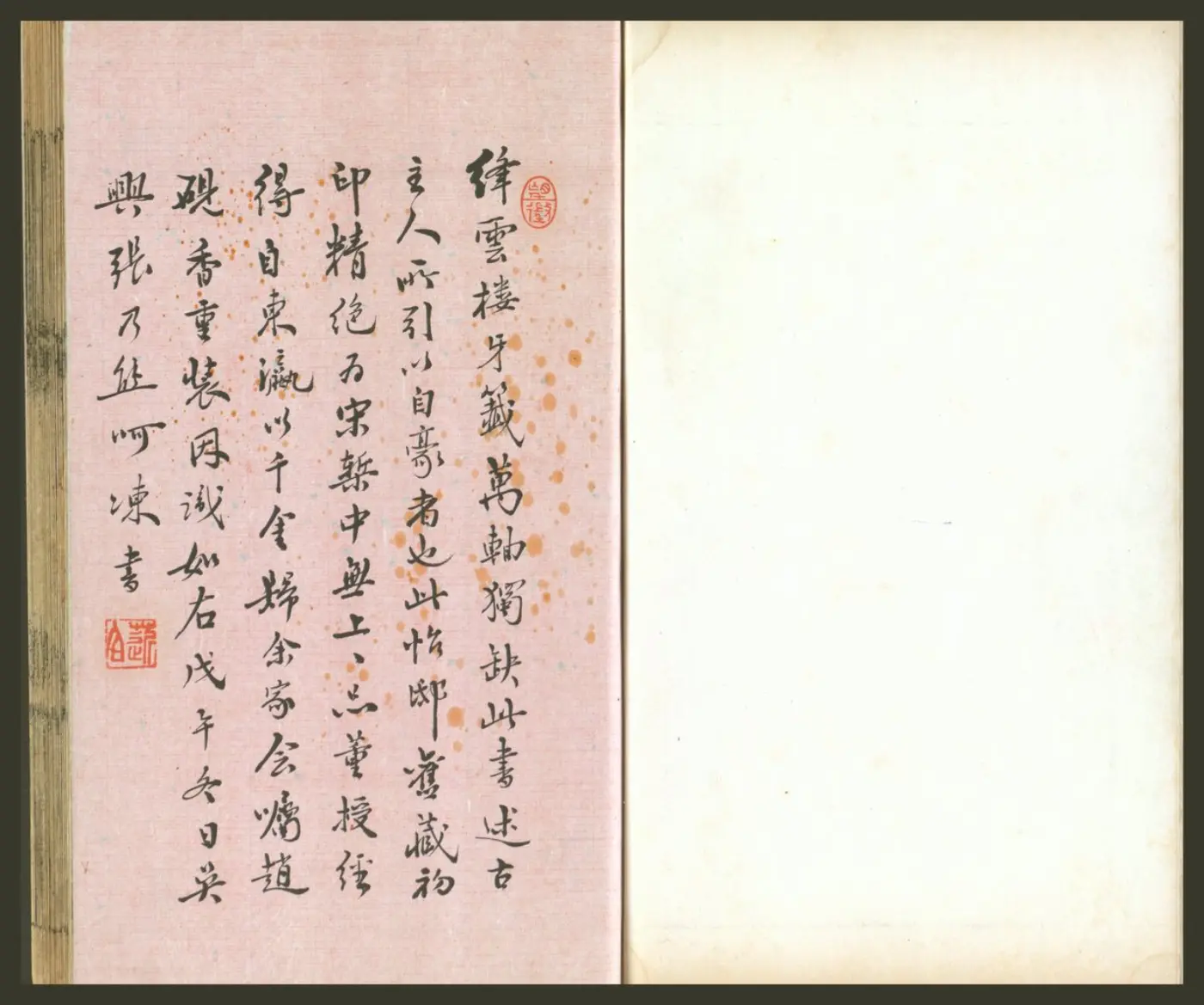
This article examines key scenes from both works. It sets them beside related stories in Jiandeng xinhua (剪燈新話), a Ming-dynasty collection, and follows the line to the Japanese Otogi bōko (御伽婢子) and the Joseon collection Gijae gii (企齋記異). Sources include the Encyclopedia of Korean Culture, the original text of Jiandeng xinhua on Chinese Wikisource (維基文庫), and entries on the Japanese dictionary site Kotobank (コトバンク).
“Namyeombuju-ji”: Bak-saeng's “Illiron” and His Dialogue with King Yama
The Encyclopedia of Korean Culture calls “Namyeombuju-ji” a dream-journey story: the plot centers on what the hero experiences in a dream. The encyclopedia considers it the work in which the philosophy of Kim Si-seup (金時習) is most concentrated. Its hero, Bak-saeng (朴生), lived in Gyeongju and did not believe in Buddhism. After visiting Namyeombuju (南炎浮洲), the realm of King Yama, in a dream, he comes to a great realization.
The encyclopedia describes Bak-saeng before the dream this way: “He further strengthened his resolve while writing ‘Illiron’ (一理論), a philosophical treatise arguing that there is only one principle in the world.” The same passage says he was wary of heterodoxies such as ghosts, shamans and Buddhism. For that reason, he read the Confucian classics. In other words, Bak-saeng already had a system of his own before he reached the underworld.
According to the encyclopedia, Bak-saeng and King Yama discuss Confucianism, Buddhism, superstition, the cosmos and politics. He reaches agreement with the king and reconfirms that his knowledge is sound. The encyclopedia names the first idea the work sets out to prove as “the superiority of Confucianism over Buddhism.” Yet this confirmation takes place in Yama's realm, and Yama himself is the other party. A scholar who did not believe in Buddhism winning the approval of the king of the underworld can be seen as a frame that holds Confucian conviction and an underworld tale together.
Jiandeng xinhua, by the Ming writer Qu You (瞿佑), also features a scholar who does not believe in ghosts. In “Taixu sifa zhuan” (太虛司法傳), the ghost king rebukes him by citing Confucius: “孔子聖人也,猶曰敬而遠之。” In other words, even Confucius, a sage, said to respect ghosts but keep them at a distance. The scholar in “Taixu sifa zhuan” is scolded, while Bak-saeng reaches agreement. This contrast suggests that Kim Si-seup lent weight to Bak-saeng's views.

The Abdication Document in “Namyeombuju-ji” and the Question of Retribution in “Sanshan fudi zhi”
According to the encyclopedia, King Yama praises Bak-saeng's true knowledge and acknowledges his ability. The entry describes what follows: “Saying he would hand over the throne, he gave him a document of abdication (禪位文) and told him to return to the world for a while.” In this passage, the reason given for passing on the throne is Bak-saeng's knowledge and ability.
The encyclopedia lists a political view as the work's third idea: a warning, made on behalf of the people, to those who rule through violence and oppression. The scene of handing the throne to a capable scholar can be read alongside this view. The same work, it seems, both criticizes rulers and shows who should be chosen to rule.
“Sanshan fudi zhi” (三山福地志) in Jiandeng xinhua also asks what retribution awaits the powerful. A character named Zishi (自實) points to a high official of the day and asks: “某人為丞相。而貪饕不止,賄賂公行,異日當受何報?” That is: so-and-so is chancellor, his greed never ends and bribery goes on openly, so what retribution will he face one day? A Taoist in the story answers. He describes what awaits the bribe-taking chancellor and a pingzhang official who killed the people.
Side by side, the two works have different focuses. “Sanshan fudi zhi” asks what punishment bad officials will later suffer. “Namyeombuju-ji” goes beyond warning against bad rule: it shows, in a scene, to whom government should be entrusted. The difference can be read as one between a story about punishment and a story about who is fit to rule.
“Yonggung buyeollok”: Han-saeng's Ridgepole Text and Retreat into the Mountains
The original manuscript of “Yonggung buyeollok” does not survive. According to the encyclopedia, the work survives in a woodblock edition of Geumo sinhwa (金鰲新話) published in Tokyo. The story behind this edition is covered in how Geumo sinhwa came to be known again. The “Yonggung buyeollok” we read today came down through a Japanese edition, so readers should keep that edition in mind.
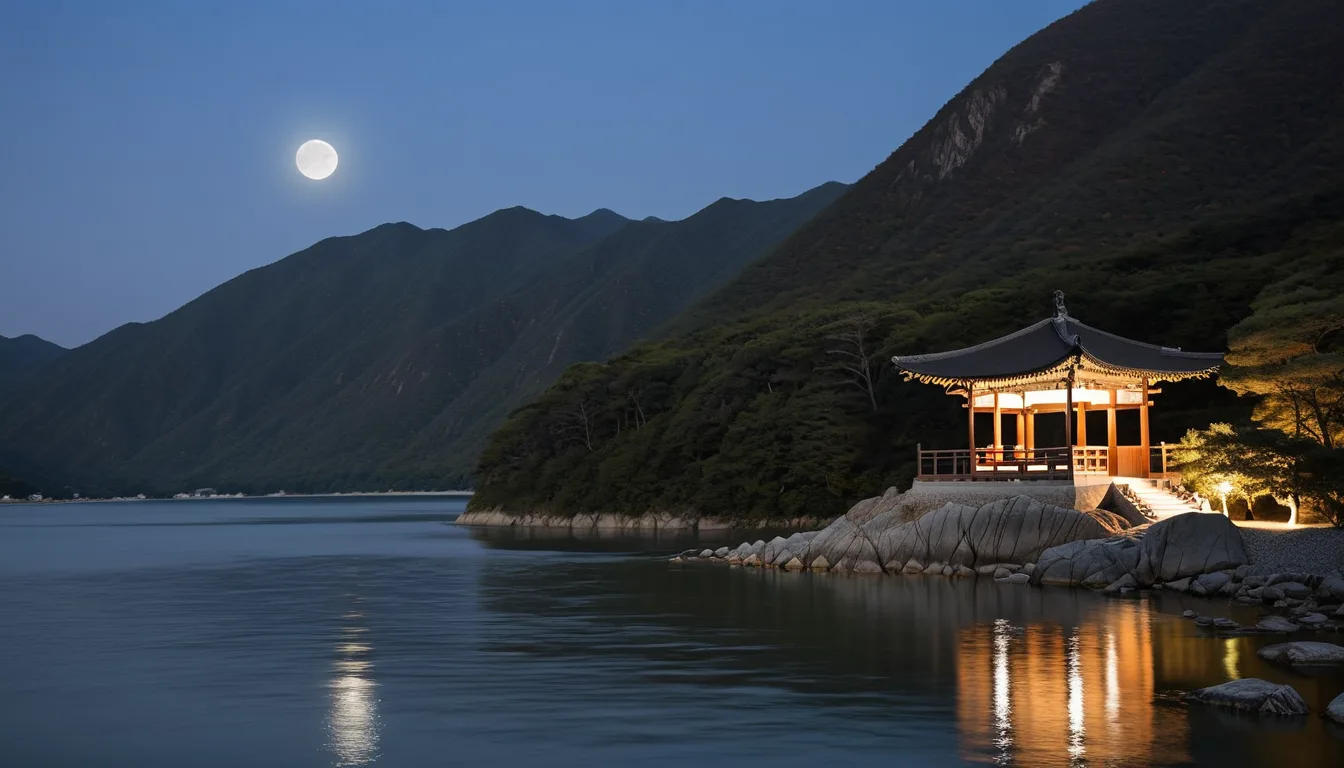
In the story, the Dragon King asks Han-saeng to write the ridgepole-raising text (上梁文) for a newly built pavilion. The king praises his talent highly and holds a banquet. When Han-saeng takes his leave, the king gives him pearls and silk. The encyclopedia describes the ending: “Waking from the dream, Han-saeng did not seek fame or profit in this world, but went into the famous mountains and vanished without a trace.”
This ending shows that recognition in the Dragon Palace does not lead to worldly success. The same entry notes that Kim Si-seup was recognized for his writing as a child. He was invited to court and praised by King Sejong (世宗). Han-saeng, who wins a king's praise for his writing, seems to echo this episode in the author's life.
Placing Bak-saeng and Han-saeng side by side reveals a contrast. Bak-saeng receives a document promising him the throne. Han-saeng receives gifts, wakes up and leaves fame and profit behind. The first scene can be read as pointing toward the seat of government, the second as pointing away from the world. This comparison shows that both directions coexist in Kim Si-seup's work.
Reading “Yonggung buyeollok” Alongside “Shuigong qinghui lu” in Jiandeng xinhua
The original text of “Shuigong qinghui lu” (水宮慶會錄) appears on the Volume 1 page of Jiandeng xinhua on Wikisource. In the jiashen year of the Zhizheng (至正) era, King Guangli (廣利王) invites Yu Shanwen (余善文), a scholar of Chaozhou (潮州). The king was building a new hall called Lingde Hall (靈德殿). The craftsmen, timber and stone were all ready. This line explains why he summoned Yu Shanwen: “所乏者惟上梁文爾。” The only thing lacking was the ridgepole text.
Compared point by point, the two works line up as follows. First, the Dragon King summons the scholar in “Yonggung buyeollok,” and King Guangli does so in “Shuigong qinghui lu.” Second, in both works the scholar is asked to write the ridgepole text for a new building. Third, the rewards differ. Han-saeng receives pearls and silk. Yu Shanwen receives 10 luminous pearls and 2 tongtian rhino horns as payment for his writing. Envoys then escort him home.
Fourth, the endings are similar. Yu Shanwen afterward gives up any interest in fame and office. He leaves home to pursue spiritual practice, wanders the famous mountains and is never heard from again.
The two works, then, share common ground from the ridgepole-text scene through to the ending. They differ in how concretely they describe the reward and how they phrase the ending. “Shuigong qinghui lu” counts the jewels and says Yu left home to pursue spiritual practice. “Yonggung buyeollok,” as the encyclopedia summarizes it, says Han-saeng went into the famous mountains and vanished. What each work spells out within the same frame helps tell the two apart.
“Longtang linghui lu”: Wen Zishu and the Seating Dispute Among the Three Lofty Men of Wu
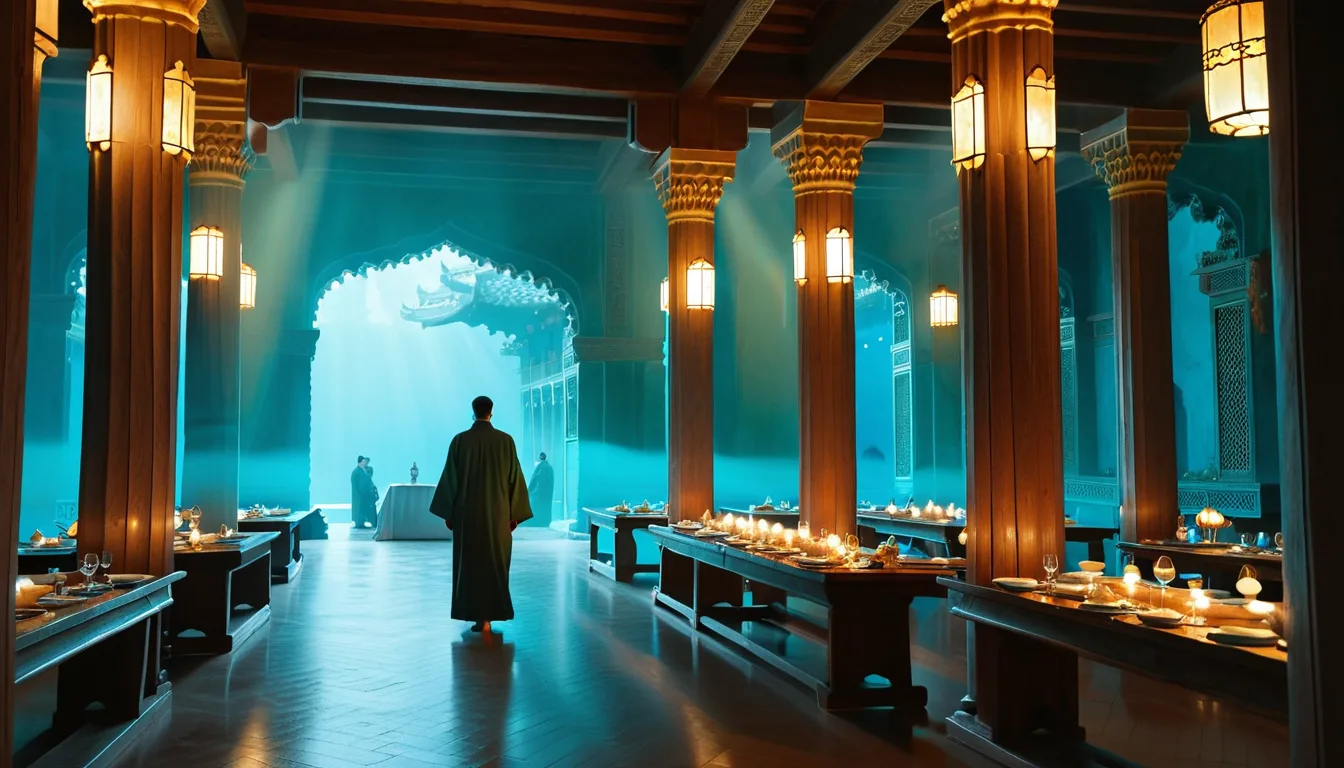
“Longtang linghui lu” (龍堂靈會錄), another dragon palace story in Jiandeng xinhua, has a different texture. Its hero, Wen Zishu (聞子述), was known for his poetry in the Wu (吳) region during the Yuantong (元統) era. He writes a poem at a shrine, returns to his boat and lies down. Then a figure with a fish's head and a ghost's body comes from the shrine. It says: “龍王奉邀。” The Dragon King has sent for him.
The guests at the palace banquet are Fan Li (范蠡), Zhang Han (張翰) and Lu Guimeng (陸龜蒙). The Dragon King introduces them as the men the world calls the “Three Lofty Men of Wu” (吳地三高). Then Wu Zixu (伍子胥) appears and denounces Fan Li. One line from his speech reads: “彼乃吳國之仇人也。” That man is the enemy of the state of Wu.
After the argument, Fan Li runs out of words and yields the seat of honor to Wu Zixu. Wu Zixu takes the first seat and Fan Li the second. Zhang Han and Lu Guimeng take the third and fourth. The original text gives the last places: “子述居第五,王坐於末席。” Wen Zishu sits fifth, and the Dragon King takes the lowest seat.
In this scene, the Dragon Palace becomes a court for judging the rights and wrongs of historical figures. Strikingly, the host himself, the Dragon King, sits in the lowest seat. Within Jiandeng xinhua, one could say that “Shuigong qinghui lu” centers on a writer's literary talent, while “Longtang linghui lu” centers on the assessment of historical figures. The ridgepole-text scene in “Yonggung buyeollok” reads as closer to “Shuigong qinghui lu.”
Otogi bōko: Asai Ryōi's Adaptation and the 1653 Japanese Edition
According to Kotobank, Geumo sinhwa reached Japan. In 1653 (Jōō 2, 承応2), it was published there as a Japanese woodblock edition, or wakokubon (和刻本). Kotobank adds that this edition contributed to the vogue for ghost-story fiction in the Edo period.
Otogi bōko is a kana-zōshi (仮名草子) by Asai Ryōi (浅井了意). Published in 1666 (Kanbun 6, 寛文6), it consists of 13 volumes and 68 stories. Kotobank calls it the representative collection of tales of the strange from the early modern period. It took 18 of the 20 stories in the 4 volumes of Jiandeng xinhua. Its story “A Bond Formed Through Poetry” (歌を媒として契る) is regarded as an adaptation of “Yi-saeng gyujang jeon” (李生窺牆傳).
Kotobank describes the book's significance this way: “仏教的応報のにおいが強かったわが国の怪異譚に人間のもつ怨念(おんねん)や情念を付加、近世怪異小説のスタイルを確立した。” In other words, Japanese tales of the strange had carried a strong flavor of Buddhist retribution. The book added human grudges and passions to them. In doing so, it established the style of early modern supernatural fiction.
This account shows that reception was not simply copying. As Chinese and Korean stories became Japanese ones, emotion can be read as taking on a larger role. Compared with the retribution question in “Sanshan fudi zhi” discussed above, Kotobank's account points to an emphasis on elements beyond retribution.
Sin Gwang-han's Gijae gii and the Water Palace Banquet in “Choe-saeng ujin-gi”
Gijae gii is a collection of chuanqi tales by Sin Gwang-han (申光漢), a civil official of the early Joseon period. The author, known by the pen name Gijae (企齋), was the grandson of Sin Suk-ju (申叔舟). The book was published in 1553 with a colophon by Sin Hwak.
The encyclopedia places the book this way: “It is a 16th-century collection of chuanqi tales situated between Kim Si-seup's 15th-century Geumo sinhwa and the 17th-century heyday (興盛期) of chuanqi fiction.” This passage places Gijae gii in the line of Korean chuanqi fiction after Geumo sinhwa. Viewed alongside the reception in Japan, it can be said that after Geumo sinhwa one current ran within Joseon while another crossed to Japan.
The book's “Choe-saeng ujin-gi” (崔生遇眞記) tells of Choe-saeng attending a banquet at the water palace (水府). This is the palace of the god who rules the waters, and there he enjoys himself with immortals. The story is set on Mount Duta, home to Dutadongcheon. Sin Gwang-han often visited the mountain while serving as magistrate of Samcheok. A scholar invited to a banquet in an underwater palace recalls the scenes in “Yonggung buyeollok” and “Shuigong qinghui lu.” Notably, the author set the story on a mountain he often visited.
The encyclopedia regards “Namyeombuju-ji” as the first story to treat ideas in depth. “Choe-saeng ujin-gi,” by contrast, centers on feasting and play with immortals. This contrast shows that even within the same family of stories, the balance between philosophical debate and fantastic experience varies from work to work.
| Text | Author | Passages used here | What to notice |
|---|---|---|---|
| “Namyeombuju-ji” | Kim Si-seup | Bak-saeng's dialogue with King Yama; the abdication document | Bak-saeng, a scholar who did not believe in ghosts, reaches agreement with King Yama |
| “Yonggung buyeollok” | Kim Si-seup | The ridgepole text; pearls and silk; retreat into the mountains | Original lost; survives in a Tokyo woodblock edition of Geumo sinhwa |
| “Shuigong qinghui lu” (Jiandeng xinhua) | Qu You | The ridgepole text for Lingde Hall; 10 luminous pearls and 2 tongtian rhino horns | Yu Shanwen gives up fame, wanders the famous mountains and is never heard from again |
| “Longtang linghui lu” (Jiandeng xinhua) | Qu You | The seating dispute between the Three Lofty Men of Wu and Wu Zixu | Wen Zishu sits fifth; the Dragon King takes the lowest seat |
| Otogi bōko | Asai Ryōi | “A Bond Formed Through Poetry” | Published 1666; 13 volumes, 68 stories; 18 stories taken from Jiandeng xinhua |
| Gijae gii | Sin Gwang-han | The water palace banquet in “Choe-saeng ujin-gi” | Published 1553; set on Mount Duta |
Related reading: Kim Si-seup's Geumo sinhwa (New Tales of Mount Geumo): How It Was Written and Rediscovered (1/3)
Conclusion
What the discussion has shown is that the frame of “a scholar recognized by the king of another world” serves different purposes in different works. In “Taixu sifa zhuan,” it leads to a rebuke; in “Namyeombuju-ji,” to agreement and abdication. In “Shuigong qinghui lu” and “Yonggung buyeollok,” it brings a reward for literary talent and a departure for the famous mountains. In “Longtang linghui lu,” it becomes a venue for judging historical figures. The adaptation in Otogi bōko can be read as a case that adds grudges and passions to this frame.
Some questions remain. What becomes of Bak-saeng after he receives the abdication document and returns to the world? Only a reading of the whole work can answer that. The original “Yonggung buyeollok” is lost, so how the Japanese edition shapes today's reading also deserves scrutiny. Finally, how does the water palace banquet in Gijae gii connect to the Dragon Palace scenes in Geumo sinhwa? Answering that requires a close reading of the original text of “Choe-saeng ujin-gi.”