The short answer
Liaozhai zhiyi (聊齋誌異), known in English as Strange Tales from a Chinese Studio, is a collection of short stories in Classical Chinese. Its author is the Qing-dynasty writer Pu Songling (蒲松齡). Classical Chinese (wenyan, 文言) was the written language of premodern China. English Wikipedia describes the book as written in the zhiguai (志怪) and chuanqi (傳奇) styles. In “Nie Xiaoqian,” a ghost woman who once offered up men’s blood ends up with a place in the family. This is the second article in a three-part series.
“Jiaona” likewise ends with Scholar Kong living like one family with a household of foxes. In “Yingning,” a fox’s daughter gives birth to a son the year after her marriage. The idea that desire breeds fear, by contrast, comes from the commentary on “The Painted Wall” in volume 1. Following this thread reveals fear and intimacy side by side in a single book. This article covers six stories from volumes 1 and 2 and how later readers judged them.
“The Painted Wall” and “The Painted Skin”: from desire to fear
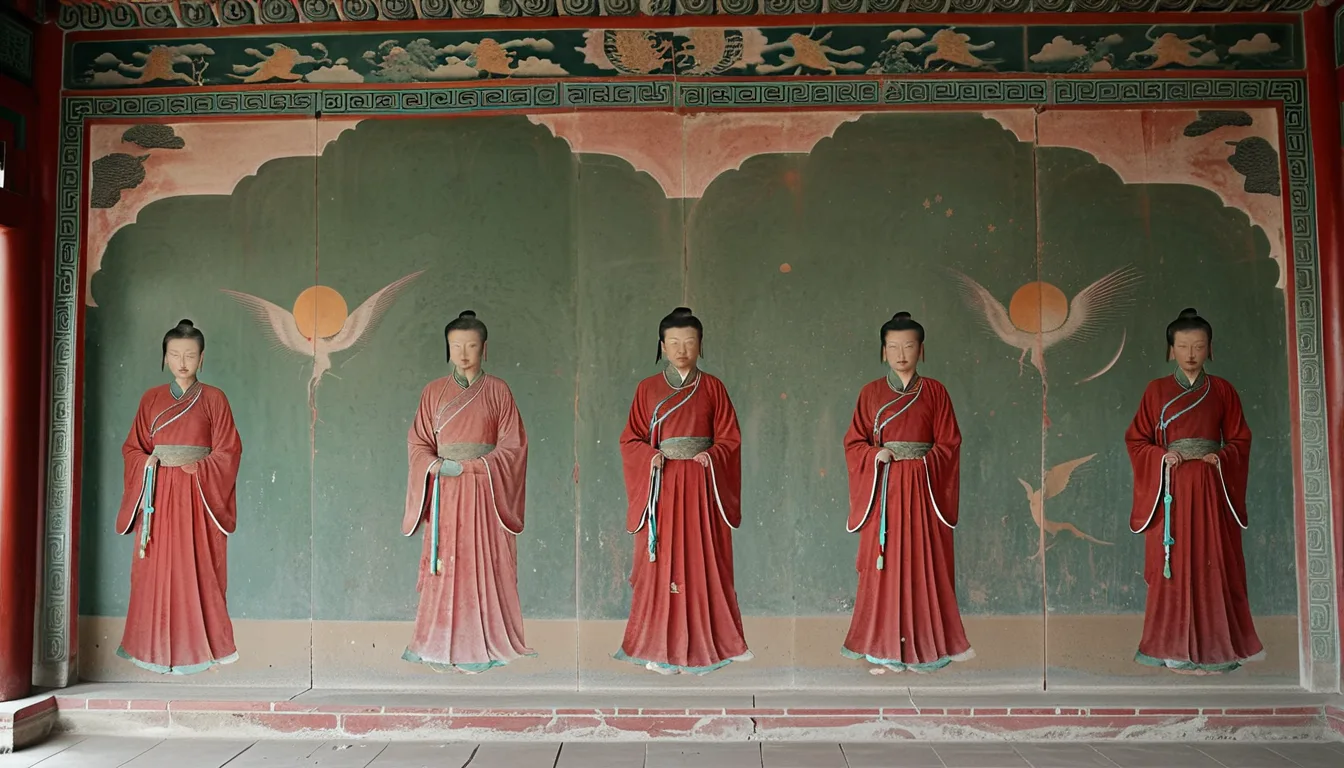
“The Painted Wall” appears in volume 1. Anyone can read the original in the volume-by-volume entries for 聊齋誌異 on Chinese Wikisource (維基文庫). In the story, Zhu Xiaolian gazes for a long time at a woman in a mural. Volume 1 describes the moment this way: “注目久,不覺神搖意奪,恍然凝想,身忽飄飄如駕雲霧,已到壁上。”
In plain English: after staring for a long time, he felt his mind waver and his spirit slip away without realizing it. As he sank into a daze, his body floated up as if riding on clouds. Before he knew it, he was inside the wall. The movement in this passage starts with Zhu’s own eyes and mind. In other words, the story begins with the person doing the looking.
“The Painted Wall” carries a comment by the Historian of the Strange (異史氏), a commentary appended to the story. It says “幻由人生”: illusion arises from people themselves. The same comment includes the line “人有淫心,是生褻境;人有褻心,是生怖境。” In other words, a lustful mind creates a realm of lewdness, and a lewd mind creates a realm of terror.
The comment treats fear as a stage of the human mind, not as a monster outside it. But it belongs to “The Painted Wall” alone. Applying its framework to other stories is my own reading. For more on the Historian of the Strange format, see Part 1, on Pu Songling and the Historian of the Strange’s comments. Volume 1 also contains “The Painted Skin” (畫皮). According to Japanese Wikipedia, Koganei Kimiko translated it in 1890 as “Kawa hitoe” (皮一重). She wrote it in a pseudo-classical Japanese style that imitated older prose.

Ning Caichen and Nie Xiaoqian in “Nie Xiaoqian”: a test of a steadfast heart
“Nie Xiaoqian” (聶小倩) appears in volume 2. The story introduces its scholar, Ning Caichen (甯采臣), this way: “甯采臣,浙人。性慷爽,廉隅自重,每對人言:「生平無二色。」”
In other words, Ning came from Zhe (浙). He was frank and generous by nature, and he held himself to strict standards of conduct. He often told people he would never have more than one woman in his whole life. This introduction presents Ning as a man who keeps his desires in check. It gains meaning when read alongside Nie Xiaoqian’s confession.
Nie Xiaoqian, the ghost woman of the title, confesses what she has been doing: “狎暱我者,隱以錐刺其足,彼即茫若迷,因攝血以供妖飲” When men grew intimate with her, she secretly pricked their feet with an awl. Once they lost consciousness, she drew their blood and offered it to a demon to drink. This pattern can be set against the stages of mind and fear in the comment on “The Painted Wall.”
Nie Xiaoqian tells Ning: “妾閱人多矣,未有剛腸如君者。君誠聖賢,妾不敢欺。” She has seen many men, she says, but none as steadfast as he is. He is truly a sage, and she dares not deceive him. The scene challenges the view of female demons as mere seductresses. Nie Xiaoqian also explains her own situation and passes judgment on the man before her.
Yingning in “Yingning”: a fox’s daughter and her laughter
“Yingning” (嬰寧) also appears in volume 2. Yingning’s origins come out through a character named Wu Sheng, who says: “秦家姑去世後,姑丈鰥居,祟于狐,病瘠死。” After his aunt of the Qin family died, her widowed husband was bewitched by a fox. He wasted away and died. Wu adds: “狐生女名嬰寧,繃臥床上,家人皆見之。” The fox bore a daughter named Yingning, and everyone in the household saw her lying swaddled on the bed.
Yingning tells the story of her birth herself: “妾本狐產。母臨去,以妾托鬼母,相依十餘年,始有今日。” She opens with the words “I was born of a fox.” When her mother left, she entrusted Yingning to a ghost mother, and the two depended on each other for more than ten years. Yingning can be read as a fox’s daughter raised by a ghost. Two kinds of otherworldly being are layered into one character’s background.
Yingning’s laughter stops after an incident with a neighbor, when her mother-in-law scolds her. Volume 2 reads: “而女由是竟不復笑,雖故逗,亦終不笑;然竟日未嘗有戚容。” Even when people tried to make her laugh, she never laughed again. Yet she never looked sad all day either. Because her mother-in-law ends the laughter, the scene suggests household norms reshaping an otherworldly nature. The line about her never looking sad shows that the change is not portrayed simply as a wound.
The Historian of the Strange’s comment on “Yingning” says that she “孜孜憨笑.” She laughs so innocently that she seems to have no thoughts at all. But the comment points to the passage “至淒戀鬼母,反笑為哭,” where longing for her ghost mother turns her laughter into tears. It then calls her “隱于笑者,” someone hiding within her laughter. The comment on “The Painted Wall” warns about the mind of the onlooker. This one looks into the inner life of the otherworldly woman. Side by side, the two comments show that the Historian of the Strange looks in more than one direction.
Scholar Kong in “Jiaona” and the origins of “Lianxiang”
“Jiaona” appears in volume 1. In it, Scholar Kong (孔生) feels no pain while Jiaona, the young woman of the title, lances his abscess. Volume 1 reads: “紫血流溢,沾染床席,而貪近妖姿,不惟不覺其苦,且恐速竣割事,偎傍不久。”
The passage opens with dark red blood pouring out and soaking the bed. Yet Kong, eager to stay close to her bewitching beauty, felt no pain. If anything, he worried the operation would end too soon and cut short his time beside her. The scene can be read as desire overriding even bodily pain. The comment on “The Painted Wall” found fear in desire; in this scene, desire erases suffering.
In the same story, young master Huangfu admits: “余非人類,狐也。今有雷霆之劫。” He is not human but a fox, he says, and he now faces a trial of thunder. This confession can be set beside Yingning’s “妾本狐產.” In both stories, the original text preserves the words in which an otherworldly being reveals its identity.
“Lianxiang” (蓮香), in volume 2, comes with a recorded origin. Japanese Wikipedia cites Tsuneishi Shigeru’s account. According to him, Pu Songling traveled south in 1670 to join the staff of Sun Hui (孫蕙), and “Lianxiang” is said to be a story he picked up on that journey. The same source says the book collected and organized stories then circulating by word of mouth, and “Lianxiang” can be seen as one example of this.
“Nie Xiaoqian,” “Jiaona” and “Yingning”: joining the family
In “Nie Xiaoqian,” Nie Xiaoqian lives in the household and helps with the chores. Volume 2 describes the mother’s feelings: “日漸稔,親愛如己出,竟忘其為鬼,不忍晚令去,留與同臥起。” As the days passed, the mother grew used to Nie and loved her like her own daughter. In the end she forgot that Nie was a ghost. She could not bear to send her away at night and kept her close.
To persuade the mother, Nie Xiaoqian says: “子女惟天所授。郎君注福籍,有亢宗子三,不以鬼妻而遂奪也。” Children, she begins, are granted by Heaven alone. Ning’s register of fortune (福籍) lists three sons who will bring glory to the family, so having a ghost wife will not take them away. Her argument rests on sons to carry on the family line. The scene can be read as the moment an otherworldly being wins her place in the language of the family.
“Nie Xiaoqian” ends with these lines: “後數年,甯果登進士。(女)舉一男。納妾後又各生一男,” A few years later, Ning did indeed pass the jinshi examination, and Nie bore a son. The character 果 (“indeed”) shows that her words came true. This ending is worth reading alongside Ning’s vow never to have more than one woman.
“Jiaona” ends with this scene: “生與公子兄妹,棋酒談讌,若一家然。” Kong spends his time with the young master and his sister over chess, wine and conversation, like one family. His son Xiaohuan grows up with “有狐意,” a fox-like air. In “Yingning,” the son born the year after her marriage “見人輒笑”: he laughs whenever he sees people. He is said to take strongly after his mother. It is as if the laughter Yingning gave up reappears in her child.

Lu Xun and Ji Yun: between Tang chuanqi and Six Dynasties zhiguai
Lu Xun (魯迅) discusses Liaozhai in chapter 22 of his A Brief History of Chinese Fiction (中國小說史略). Like similar books of its time, he notes, it records tales of immortals, foxes and ghosts. But he praises its detailed description and orderly narration. The key line is “用傳奇法,而以誌怪,變幻之狀,如在目前.” In other words, it uses the methods of chuanqi to write zhiguai, so the transformations seem to unfold before the reader’s eyes.
This judgment explains the character of the passages above. Zhu’s spellbound absorption in “The Painted Wall” and the operation scene in “Jiaona” are closer to detailed description than to brief record. Lu Xun also writes that some stories were adapted from Tang chuanqi. He cites “The Scholar of Fengyang” (鳳陽士人) and “Sequel to the Yellow Millet Dream” (續黃粱). He then says “此不自白,殆撫古而又諱之也”: the author probably modeled them on older works but concealed that he had done so.
Ji Yun (紀昀, 1724–1805) saw the book from a different angle. Lu Xun sums up Ji Yun’s criticism in this line: “蓋即訾其有唐人傳奇之詳,又雜以六朝誌怪者之簡” In other words, Ji Yun faulted the book for mixing the detail of Tang chuanqi with the brevity of Six Dynasties zhiguai. According to Japanese Wikipedia, Ji Yun acknowledged Pu Songling’s talent. But he dismissed the book as a frivolous piece of free invention and wrote his own Yuewei caotang biji (閱微草堂筆記).
Lu Xun, then, praised the very quality Ji Yun saw as a flaw. Together, the two judgments place Liaozhai between chuanqi and zhiguai. English Wikipedia takes the three Ming-dynasty “hua” (話) collections as a benchmark, including Qu You’s Jiandeng xinhua (剪燈新話). It presents Liaozhai as the most highly regarded collection of strange tales since those works.
The “Jiaona” comment, qing, and Nie Xiaoqian in translation and film
The Historian of the Strange’s comment on “Jiaona” says: “余於孔生,不羨其得艷妻,而羨其得膩友也。” He does not envy Kong for winning a beautiful wife; he envies him for winning a close friend. Compared with the family scenes above, this comment puts its weight on the friend rather than the wife. It can be read as the commentator adding a different kind of intimacy to a plot that gathers everyone into a household.
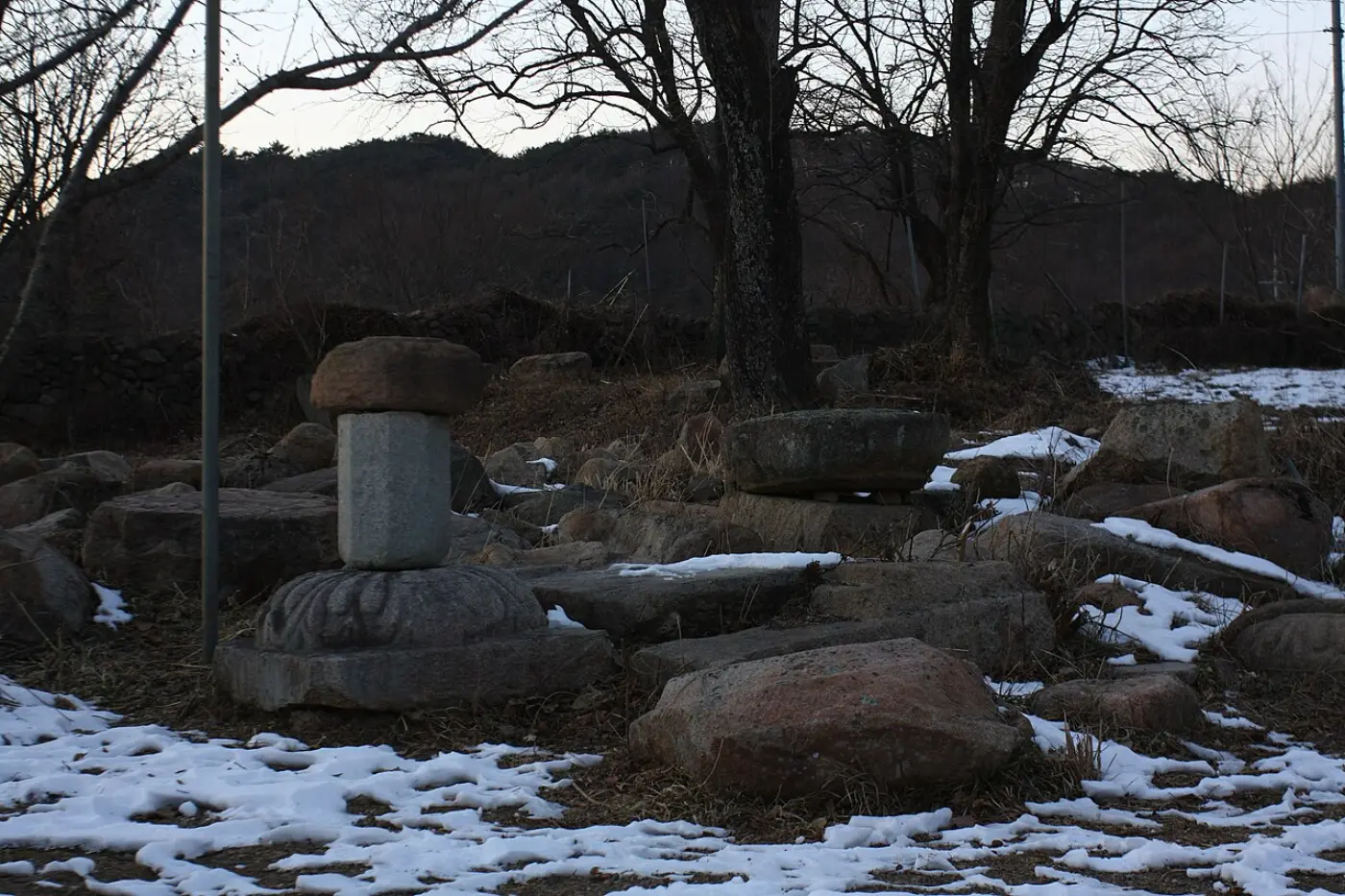
Lu Xun points out that the book’s flower spirits and fox demons have human feelings: “使花妖狐魅,多具人情,和易可親,忘為異類,而又偶見鶻突,知復非人” They are so warm and approachable that readers forget they are otherworldly. Then an occasional oddity reminds readers that these beings are not human after all. The scene in which the mother forgets that Nie Xiaoqian is a ghost fits this description. English Wikipedia likewise says the book’s “scary stories” aim to blur the line between the supernatural and the everyday. It adds that they explore qing (情), feeling that crosses the boundary between human and supernatural.
Comparing foreign translations and films item by item brings out further differences. In Giles’s English translation, fox spirits chat with people and share tea instead of seducing them. English Wikipedia notes that the lovers in that translation exchange a kiss at most. According to Japanese Wikipedia, Li Han-hsiang’s 1960 film Qiannü youhun (倩女幽魂) adapted “Nie Xiaoqian.” English Wikipedia adds that films by King Hu, Gordon Chan, Ching Siu-tung and others were also based on the book.
Set Giles’s edits beside the “貪近妖姿” of “Jiaona,” and it becomes clear how much room desire takes up in the original. Abe Yasuki argued that Liaozhai deliberately ignores common sense. He also argued that it favors stories praising a strong spirit able to withstand a shallow, frivolous age. His view connects to the “剛腸” (steadfast heart) Nie Xiaoqian sees in Ning Caichen. Depending on translation and interpretation, the same book can read as a story of seduction or a story of spirit.
| Story | Volume | Passages used in this article | Related sources |
|---|---|---|---|
| “The Painted Wall” | Vol. 1 | Zhu Xiaolian gazes at the woman in the mural and enters the wall; the Historian of the Strange’s comment | Wikisource, 聊齋誌異 vol. 1 |
| “The Painted Skin” | Vol. 1 | Koganei Kimiko’s 1890 Japanese translation, “Kawa hitoe” | Japanese Wikipedia, “聊斎志異” |
| “Jiaona” | Vol. 1 | Scholar Kong’s abscess operation; young master Huangfu’s confession; the one-family ending; the Historian of the Strange’s comment | Wikisource, 聊齋誌異 vol. 1 |
| “Nie Xiaoqian” | Vol. 2 | Ning Caichen’s introduction; Nie Xiaoqian’s confession; the mother’s acceptance; the jinshi degree and the birth of a son | Wikisource, 聊齋誌異 vol. 2; 1960 film Qiannü youhun |
| “Yingning” | Vol. 2 | Her birth as a fox’s daughter; the end of her laughter; the birth of her son; the Historian of the Strange’s comment | Wikisource, 聊齋誌異 vol. 2 |
| “Lianxiang” | Vol. 2 | A story picked up on the 1670 journey south, as recounted by Tsuneishi Shigeru | Japanese Wikipedia, “聊斎志異” |
Related reading: Why Pu Songling Poured His Plight into Ghost Stories (1/3)
Conclusion
Taken together, these passages show the otherworldly woman wearing several faces: threat, confessor and family member. In “Nie Xiaoqian,” the ghost who once offered up blood is loved like a daughter of the house and bears a son. In “Yingning,” laughter stops under a mother-in-law’s scolding and returns in a child’s laughter. This arc can be read as the process of bringing the otherworldly into the order of the family. Yet the comments on “Jiaona” and “Yingning” do not reduce these characters to the role of wife.
Some questions remain. How would the scenes in “The Painted Skin” and “Lianxiang” look through the same lens? Only the originals can answer that. Whether the “realm of terror” in the comment on “The Painted Wall” fits other stories is also an open question. Finally, how does the style that Lu Xun and Ji Yun judged so differently connect to the intimacy of these scenes?