The short answer: dolmens in three areas, inscribed in December 2000 under criterion (iii)
The dolmen sites of Gochang, Hwasun and Ganghwa became World Cultural Heritage in December 2000. The Ministry of Culture, Sports and Tourism lists a single inscription criterion: criterion (iii). Dolmens are a type of prehistoric tomb. Hwasun County's official website calls them megalithic monuments, meaning monuments built from large stones. This is part 7 of a 17-part series.
The three areas share one name, but each preserves something different. Hwasun still has the quarry where capstones were cut. Ganghwa has the largest table-style dolmen in Korea. Gochang has a cluster where two types of dolmen sit side by side. Because of these differences, it helps to treat the property as a group of three sites rather than one place.
The Cairns meeting: inscription on December 2, 2000, and the dolmen count in each area
According to the Academy of Korean Studies and Hwasun County, the inscription was confirmed on December 2, 2000. That day the 24th session of the World Heritage Committee Bureau met in Cairns, Australia. It approved the Gochang, Hwasun and Ganghwa dolmens, which were then formally inscribed. The Ministry of Culture, Sports and Tourism also dates the inscription to December 2000.
The ministry gives a separate dolmen count for each area: 447 in Gochang, 596 in Hwasun and about 160 in Ganghwa. However, not every dolmen in each area falls within the inscribed property. The Academy of Korean Studies' digital humanities archive explains that 70 of Ganghwa's 160 dolmens were inscribed in 2000. They were inscribed together with the Hwasun and Gochang dolmens in Jeolla Province.
For Hwasun, the protected area is measured in hectares. The Academy of Korean Studies and Hwasun County give the core zone as 200 ha and the buffer zone as 47.39 ha. They put the total designated area at 247.46 ha. The two zones do not add up exactly to the total, so it is safest to quote the figures as the source gives them. The number of dolmens, the number inscribed and the designated area answer different questions. When you see a figure on a sign, first work out which of these it refers to.
Criterion (iii): two sources, two readings
Inscription criteria are the grounds on which the World Heritage Committee recognizes a property's value. The Ministry of Culture, Sports and Tourism gives this property's criterion as "World Cultural Heritage criterion (III)." Hwasun County runs the official website of the Hwasun Dolmen Sites. Its introduction spells out the criterion in parentheses: "to bear a unique or at least exceptional testimony to a tradition or civilization which is living or which has disappeared."
The Academy of Korean Studies and Hwasun County paraphrase the same criterion differently. They describe it as "unique, extremely rare, or very old." The first reading stresses evidence of a tradition or civilization. The second stresses uniqueness, rarity and age. In other words, the same criterion number can carry a different emphasis depending on the source. Reading the number alongside its interpretation also helps with the inscription criteria for the Gyeongju Historic Areas, covered in an earlier part.
Sources also disagree on how many dolmens there are on the Korean Peninsula. The Ministry of Culture, Sports and Tourism says close to 30,000 dolmens are spread across Korea. An English-language sign at Ganghwa, reproduced in the Academy of Korean Studies' digital humanities archive, gives a figure of 40,000 to 45,000 for the Korean Peninsula. The sign calls this nearly 40% of the world's total. The two sources also cover different areas: the first counts "Korea," the second "the Korean Peninsula." The share of the world total is best treated as one sign's description, not an established statistic.
From the 1995 village-tree survey to the June 1999 nomination
A survey on December 15, 1995, revealed how far the Hwasun dolmens extend. Surveyors first examined the dolmen beside the village guardian tree in Mosan village, Hyosan-ri, Dogok-myeon. They then followed the valley toward Bogeomjae pass and confirmed how widely the dolmens were spread. The Academy of Korean Studies and Hwasun County say scientific dating places the Daesin-ri dolmens between 500 and 800 BC. They add that some artifacts suggest a date of 1000 BC or earlier. In a 2002 Seoul Shinmun article, however, President Kim Byung-mo said there was not yet any archaeological evidence that they predate 1000 BC.
The bid did not include all three areas from the start. According to the Academy of Korean Studies and Hwasun County, discussion of inscription began in 1997 and site selection in 1998. The first candidate was the Gochang dolmens in North Jeolla Province. The Cultural Heritage Committee of the Cultural Heritage Administration then advised adding South Jeolla Province, where dolmens are concentrated, and selection work began there. The nomination, which by then included Ganghwa, was submitted to the World Heritage Committee secretariat on June 28, 1999. The three-area grouping, in other words, grew step by step during preparation.
Research and events continued after inscription. Hwasun carried out five excavations between 2000 and 2013. According to the Seoul Shinmun, the World Megalithic Culture Festival was first held in Ganghwa in 2001, and the second festival, in 2002, centered on Hwasun. In the same article, Michael Quinn, director of archaeology at Australia's culture and tourism agency, said he was one of those who voted to inscribe the Hwasun dolmens. Kim Byung-mo pointed to the thatched-roof house Hwasun built in the middle of the site as an example of overprotection to avoid. These accounts suggest that debate over how to conserve the sites went on after inscription.
What to look for on site: table, go-board and capstone-only dolmens, and the Hwasun quarry
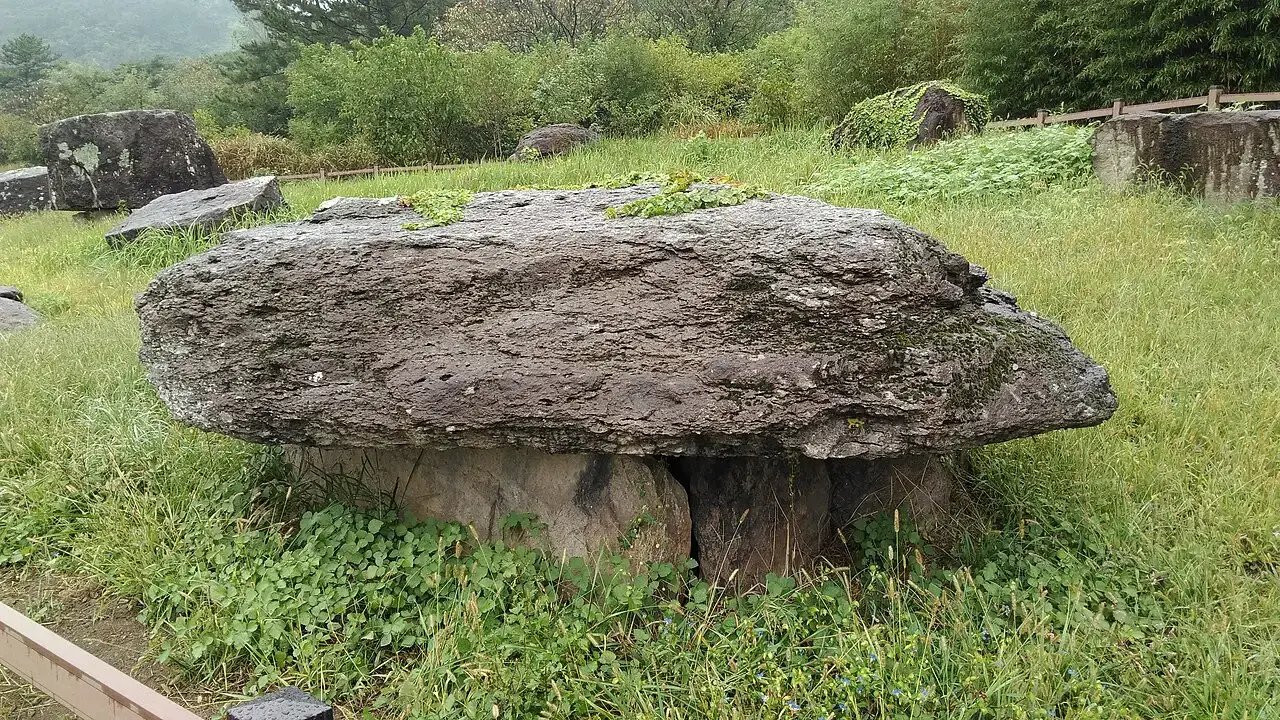
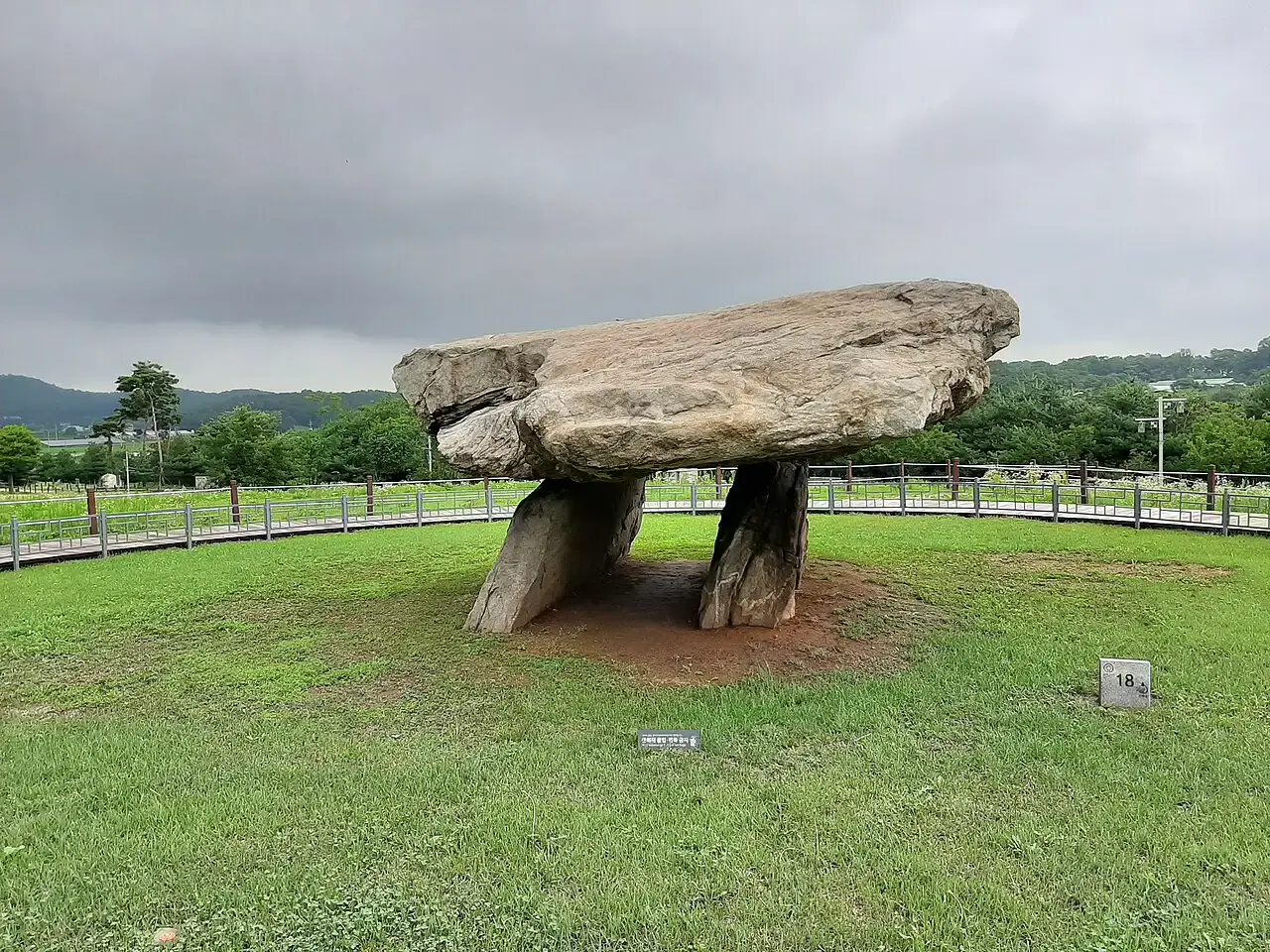
Dolmens fall into several types by shape. The Ministry of Culture, Sports and Tourism describes the table type as four upright support stones topped by a huge capstone. Support stones are the stones that hold up the capstone. A capstone-only dolmen has no support stones beneath its capstone. According to the Encyclopedia of Korean Culture, of the 10 or so dolmens at Maesan-ri, Asan-myeon, in Gochang, 2 are table type and the rest are go-board type. The encyclopedia also gives alternative names: northern type for the table style and southern type for the go-board style.
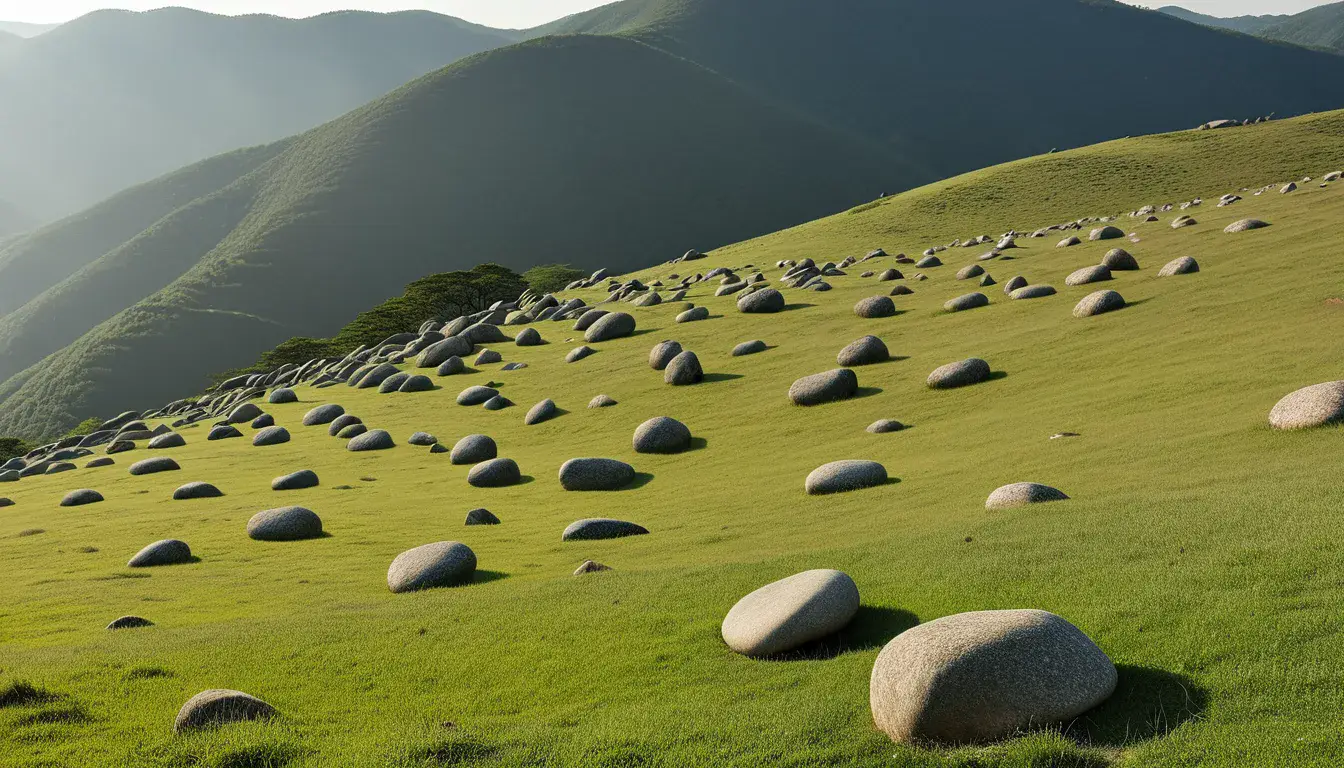
According to the Ministry of Culture, Sports and Tourism, Ganghwa has Korea's largest table-style dolmen, 6.399 m long and 2.454 m high. The ministry adds that the Ganghwa dolmens sit as high as 100 to 200 m above sea level, above the average elevation of Korean dolmens. The Academy of Korean Studies' digital humanities archive describes the Bugeun-ri dolmen group as 16 dolmens on low hills and flatland about 50 m above sea level. Capstone-only dolmens stand around a pine grove about 300 m away. On a low hill to the east, table and capstone-only types stand together. Seeing both types in one village is a good way to match the type names to real stones.
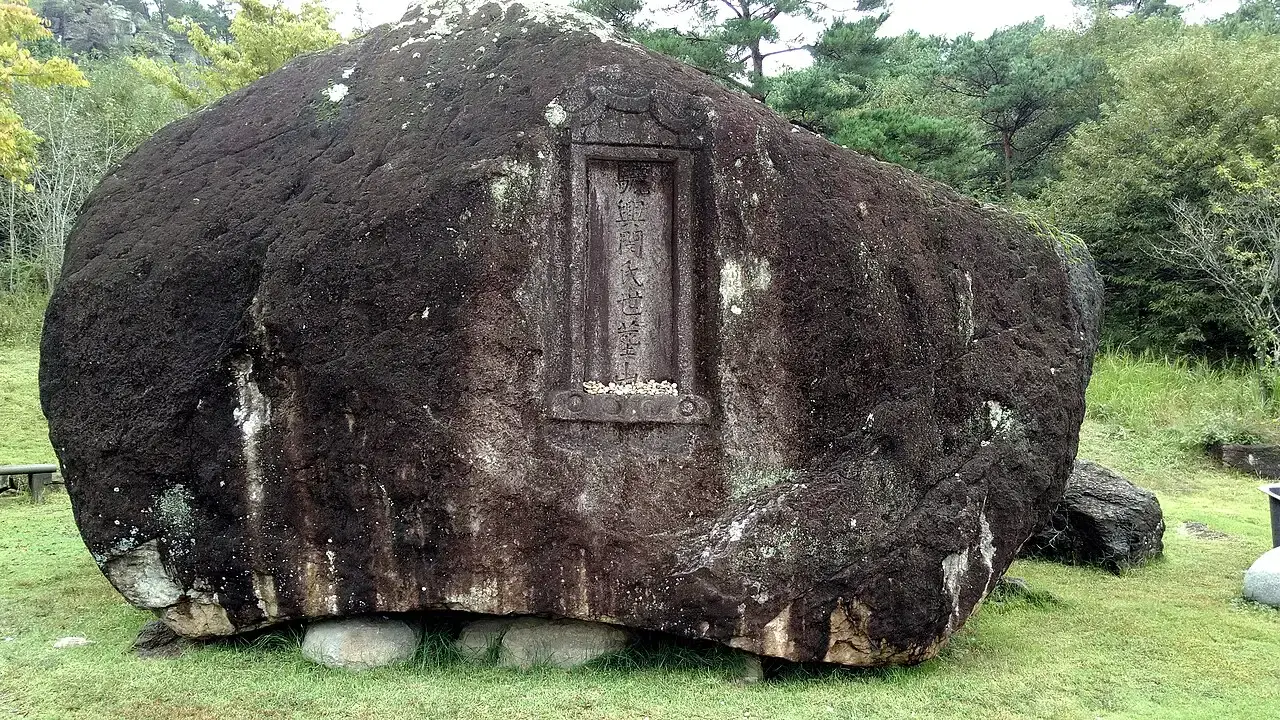
Hwasun County's official website says the Hwasun dolmens lie along a roughly 5 km stretch of the Bogeomjae valley between Hyosan-ri and Daesin-ri. They sit 45 to 120 m above sea level. The Academy of Korean Studies and Hwasun County mention dozens of dolmens weighing over 100 tons, and one of about 280 tons. The county website instead speaks of "dolmens weighing over 200 tons," so the two sources differ on the maximum weight. The site preserves a quarry and partly quarried stones, with dolmens of various forms below them. The Ministry of Culture, Sports and Tourism sees the quarry as evidence of the period's stoneworking techniques and of how dolmens were built and moved. With the cutting site and finished dolmens in one valley, you can follow how a dolmen was made.
| Site | Recorded number of dolmens | Role in the nomination process | What to see on site |
|---|---|---|---|
| Gochang dolmen site | 447 | First candidate in the 1998 site selection | About 10 dolmens at Maesan-ri, Asan-myeon: 2 table type, the rest go-board type |
| Hwasun dolmen site | 596 | Added through the South Jeolla selection work begun on the Cultural Heritage Committee's advice | A quarry and partly quarried stones; dozens of dolmens weighing over 100 tons |
| Ganghwa dolmen site | About 160 (70 of them inscribed) | Included in the nomination submitted on June 28, 1999 | Korea's largest table-style dolmen, 6.399 m long and 2.454 m high |
Summary
At the dolmen sites, records from three areas overlap, along with conflicting figures and interpretations. Sources disagree on the peninsula's share of the world's dolmens and on when the Hwasun dolmens were built, and both questions remain open. The claim of a date of 1000 BC or earlier is best read alongside the 2002 remark that no evidence for it existed yet. Hwasun's maximum weight also differs: about 280 tons in one source, over 200 tons in another. Note which source gives which figure.
The original texts are on Hwasun County's official Hwasun Dolmen Sites World Heritage website. Related material is also available in the Academy of Korean Studies' Encyclopedia of Korean Culture and its digital humanities cultural heritage archive. On site, try matching the type names to the shapes of the stones, and check what each figure on the signs is actually counting.