The short answer: a layout that follows the mountains is at the heart of the inscription
Changdeokgung Palace (昌德宮) was added to the UNESCO World Heritage List in 1997. The Royal Palaces and Tombs Center, part of the Korea Heritage Service, locates its core value in buildings arranged to suit the surrounding mountains. The center cites cultural heritage criteria (ii), (iii) and (iv). This article is part 4 of a 17-part series.
The Encyclopedia of Korean Culture gives another strand of reasoning: the palace was used over a long period and reflects royal life. The first explanation looks at how the space is arranged. The second looks at the history of its use. Reading the two separately arguably gives a more concrete picture of why the palace was inscribed.
Inscribed 6 December 1997 under criteria (ii), (iii) and (iv): compared with royal sites in other countries
The center's English-language guide gives the inscription date as 6 December 1997 and lists the criteria as 'Cultural heritage (ii), (iii), (iv)'. The guide mentions the rear garden (後苑) separately from the palace buildings. When weighing the reasons for inscription, then, read the halls and the garden together.
The World Heritage Committee's 1997 decision record includes a statement by the Korean delegate, who thanked the Committee for its decision to inscribe the two properties on the World Heritage List. In the same record, the 21st session of the Committee inscribed Hwaseong (華城) under criteria (ii) and (iii). It regarded Hwaseong as an outstanding example of early modern military architecture, because the fortress incorporated the most highly developed features of military architecture from both East and West.
A site-by-site comparison with other countries is instructive. China's Imperial Palaces of the Ming and Qing Dynasties were inscribed in 1987. Japan's Gusuku Sites and Related Properties of the Kingdom of Ryukyu followed in 2000. The Ming and Qing palaces were first listed under (iii) and (iv); criteria (i) and (ii) were added with the 2004 extension. The Ryukyu sites are listed under (ii), (iii) and (vi). They illustrate some 500 years of history, from the 12th to the 17th century. In short, criterion (iv) applies to Changdeokgung and the Ming and Qing palaces, but not to Hwaseong or the Ryukyu sites.
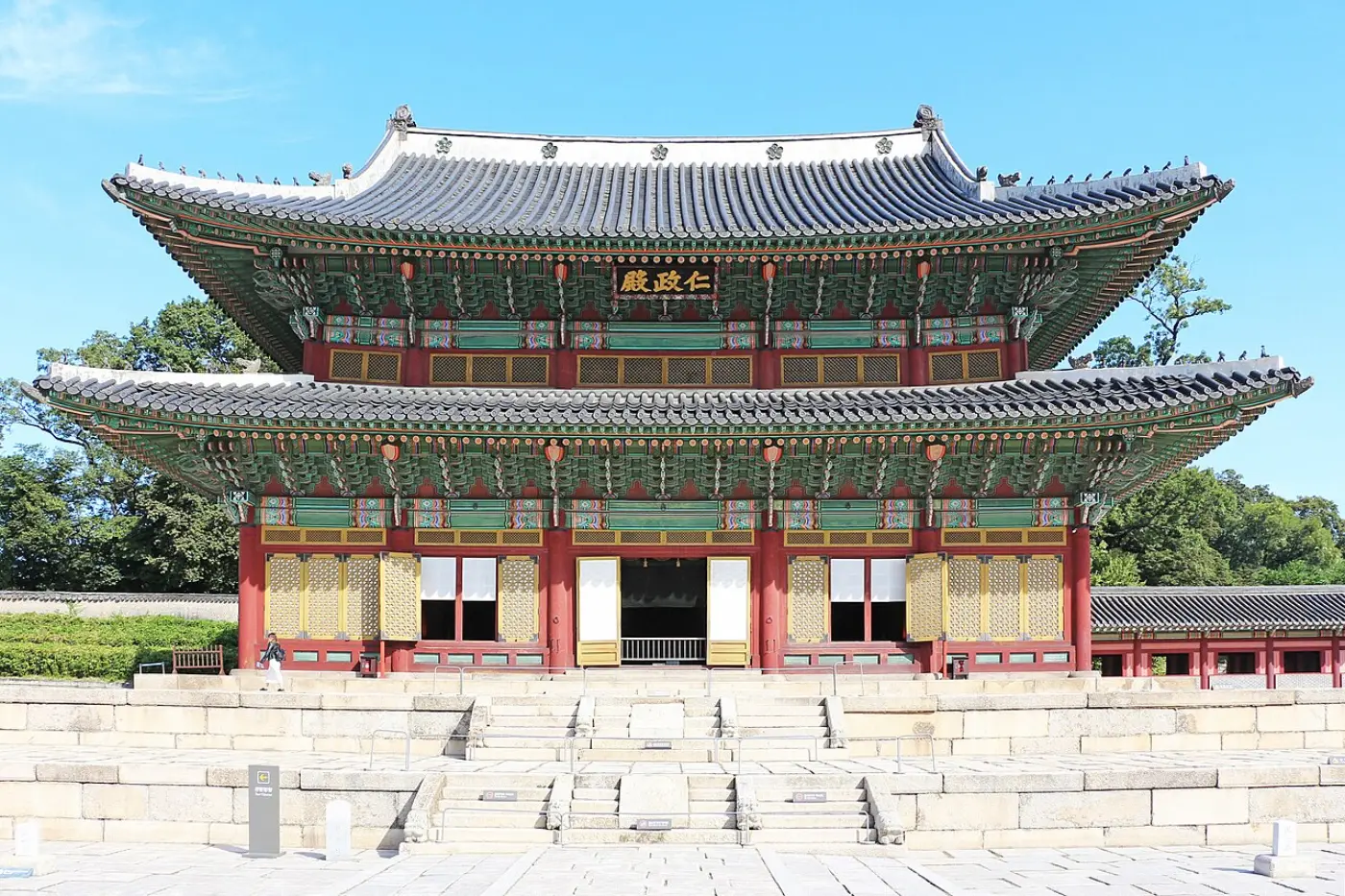
Mountains instead of palace norms: how the Korea Heritage Service reads criterion (iv)
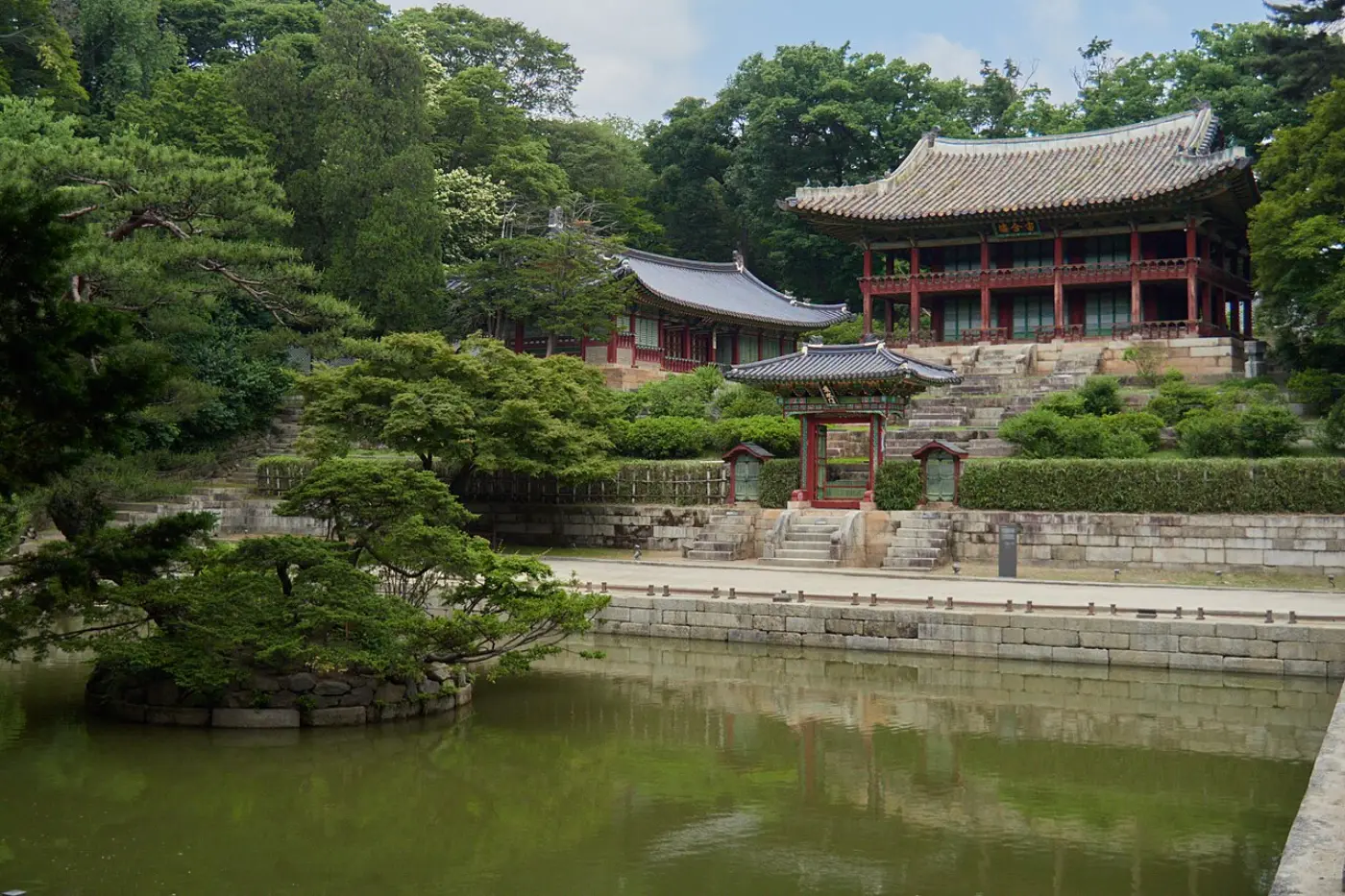
The assessment in the Royal Palaces and Tombs Center's English-language guide reads, in translation: "Changdeokgung does not follow the set standards of a typical palace. Instead, its buildings are arranged according to the topography of the neighboring mountains, and it is regarded as the pinnacle of Korean palaces." The guide adds that the pavilions and ponds in each section of the rear garden are well preserved. They also blend well with nature.
The same guide explains what criterion (iv) requires: a site must be an outstanding example of a type of building, architectural or technological ensemble, or landscape that illustrates a significant stage in human history. Read beside the assessment above, this suggests treating Changdeokgung not as a single building but as an ensemble of buildings and mountains. UNESCO, for its part, described the Ming and Qing palaces under criterion (iv) as an outstanding example of the largest palace architectural complex in China. The same criterion, it seems, stresses scale at one site and the relationship with the terrain at the other.
The Encyclopedia of Korean Culture's entry on Changdeokgung explains the designation this way: "Because it was used continuously over such a long period and reflects the varied and complex life of the royal court, it was designated a UNESCO World Heritage Site." The encyclopedia also says the palace was built to harmonize with the surrounding terrain. It adds that Changdeokgung is regarded as 'the most Korean of palaces'. Nocut News, citing the Royal Palaces and Tombs Center, likewise reports that Changdeokgung, unlike other palaces, did not follow an artificial structure.
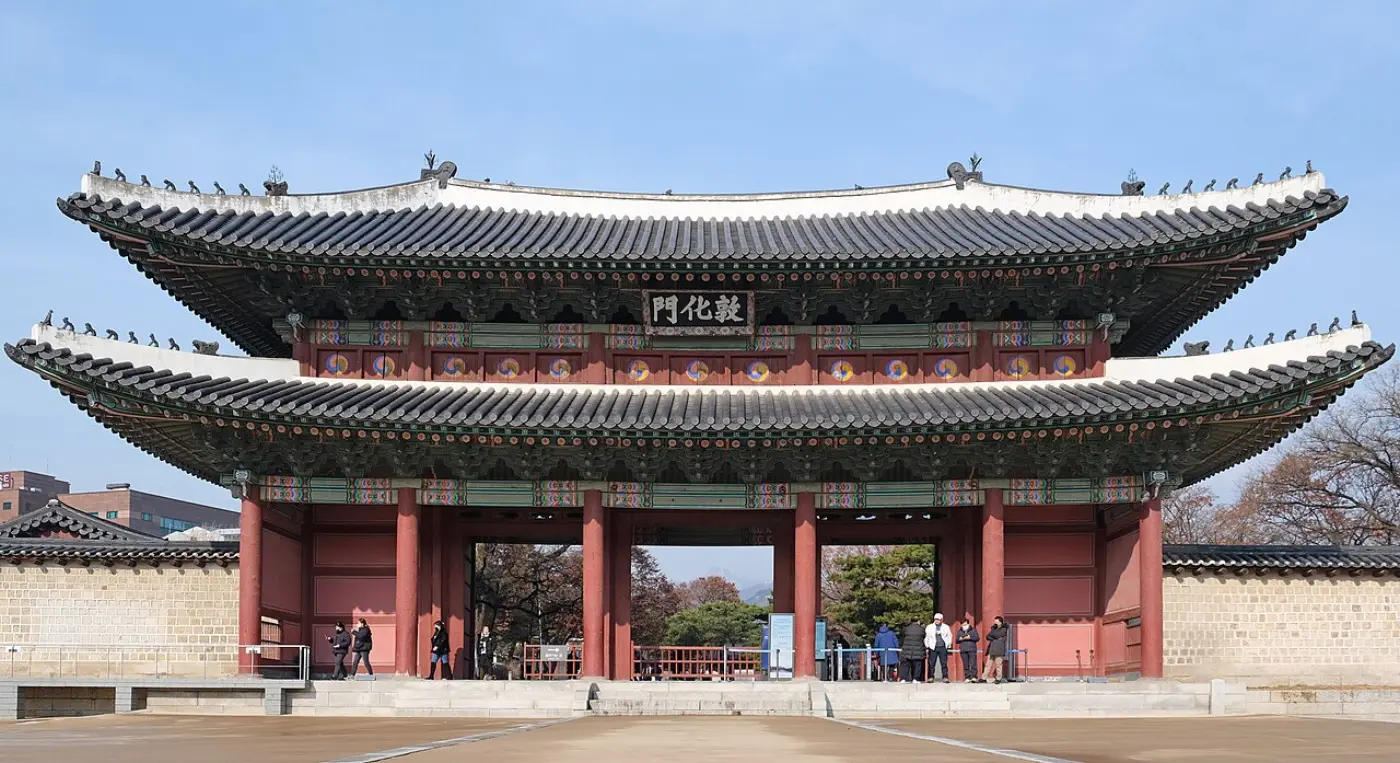
From a secondary palace in 1405 to the rear garden under King Sukjong: the encyclopedia's account
According to the Encyclopedia of Korean Culture, Changdeokgung was founded in 1405 as a secondary palace (離宮). It was not the main palace (法宮), the palace where the king lived. Gyeongbokgung (景福宮), however, was not rebuilt after the Imjin War (壬辰倭亂). As a result, Changdeokgung served as the main palace until the reign of King Gojong. For the full story, see our palace series article on how Changdeokgung became the main palace.
The palace suffered heavy damage again during the Injo Restoration (仁祖反正) of 1623. Most of its halls burned, apart from part of the outer court. It then lay neglected for 25 years until its restoration in 1647. Under King Sukjong, Jejeonggak (齊政閣) was built and fitted with various astronomical instruments. In the same period, the rear garden was laid out in earnest with the building of pavilions such as Cheongsimjeong (淸心亭), Neungheojeong (凌虛亭) and Aeryeonjeong (愛蓮亭).
This account shows that today's rear garden was not completed all at once when the palace was founded. The designation's phrase 'continuous use over a long period' can be read as this cycle of destruction, restoration and expansion. The two strands of the inscription rationale, the terrain-based layout and the history of use, arguably meet in the rear garden.
What changed: the great fire of 1917 and the 1991 Donggwoldo analysis
The Encyclopedia of Korean Culture dates Changdeokgung's last great fire to November 1917. The restoration filled in the main areas with buildings moved from Gyeongbokgung, such as Gangnyeongjeon (康寧殿) and Gyotaejeon (交泰殿). In the encyclopedia's judgment, this reconstruction greatly altered Changdeokgung's original appearance. To learn where the relocated halls first stood, see our article on how Gyeongbokgung was destroyed and rebuilt.
A 1991 study in the Journal of the Korean Institute of Landscape Architecture analyzed written records and the Donggwoldo (東闕圖) painting. It found that most present-day spaces differ considerably from those of the traditional palace, though the rear garden had not been badly damaged. The study also noted that the spaces of Injeongjeon (仁政殿) and Daejojeon (大造殿) were restored immediately.
Together, the two sources let you distinguish what survives 'as originally built' from the 'spaces that changed greatly'. Notably, the rear garden, central to the inscription rationale, is the relatively less damaged part. Conversely, when you look at the arrangement of the halls, keep the changes after 1917 in mind.
| Site | Year inscribed | Criteria | Features noted in the sources |
|---|---|---|---|
| Changdeokgung (Korea) | 1997 (6 December) | (ii), (iii), (iv) | Buildings arranged to suit the surrounding mountains rather than palace norms |
| Hwaseong (Korea) | 1997 (21st Committee session) | (ii), (iii) | An outstanding example of early modern military architecture, combining Eastern and Western military features |
| Imperial Palaces of the Ming and Qing Dynasties (China) | 1987; extended in 2004 to include the Shenyang Imperial Palace | (iii), (iv), with (i) and (ii) added | An outstanding example of the largest palace architectural complex in China |
| Gusuku Sites and Related Properties of the Kingdom of Ryukyu (Japan) | 2000 | (ii), (iii), (vi) | Illustrates some 500 years of Ryukyu history, from the 12th to the 17th century |
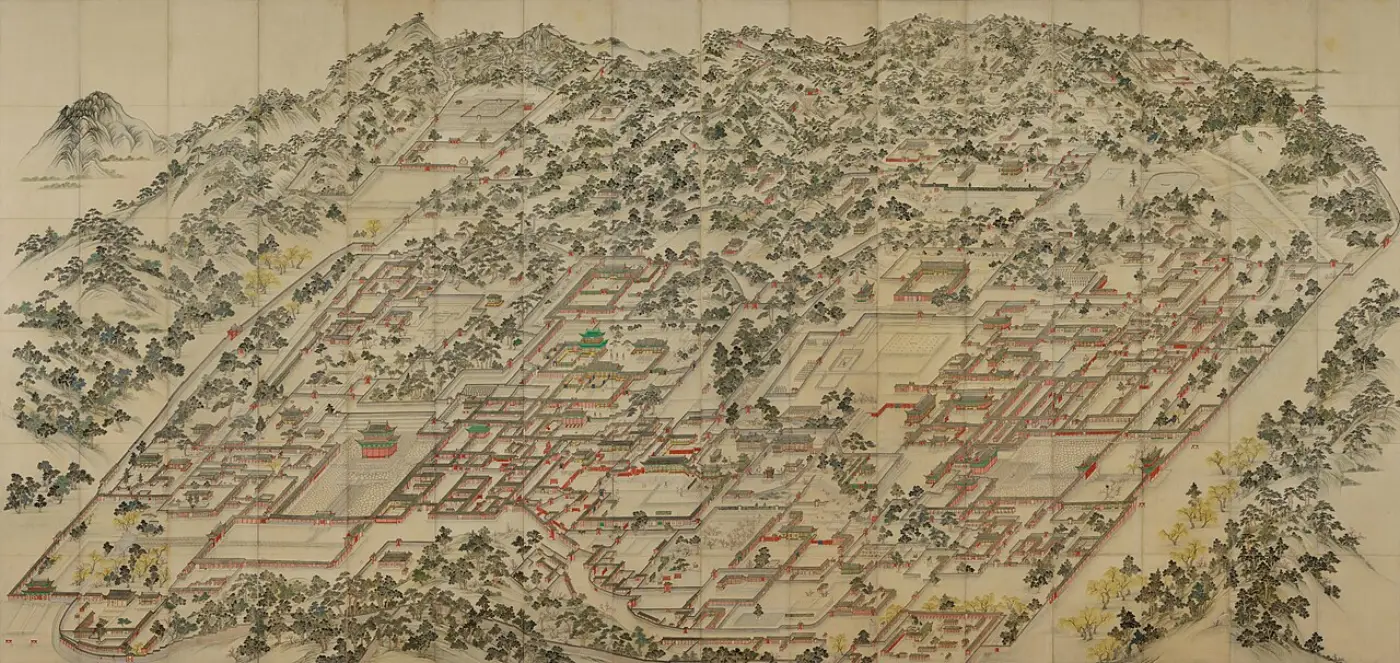
In summary: on site, look at the mountains, the rear garden and the changed layers together
These sources let you see the same palace on two levels. The official inscription guide speaks of a layout that follows the mountains and of the rear garden's pavilions and ponds. The encyclopedia and the 1991 study speak of layers of time built up through fires, relocations and restorations. That leaves one question: which period's layer does the building in front of you belong to? Keeping that question in mind as you walk arguably makes the inscription rationale clearer on site.
Start inside Injeongjeon. The Seoul Metropolitan Government's 'Seoul in My Hand' notes that the hall contains the royal throne (御座). Behind it stands an Irworobongdo (日月五峰圖), a screen of the sun, moon and five peaks. It symbolizes all of creation under the king's rule. Then, in the rear garden, notice how the pavilions and ponds sit against the mountain slopes. You can read the original texts on the Royal Palaces and Tombs Center's website and in the Encyclopedia of Korean Culture. The UNESCO World Heritage Centre's decisions database (whc.unesco.org) has them too.