The short answer: a lockout is industrial action by an employer; a strike is industrial action by workers
A lockout is industrial action taken by an employer. A strike is industrial action in which workers collectively stop work. Industrial action means conduct by labor or management that disrupts a business's normal operation in order to press demands. Korea's Trade Union Act classifies both strikes and lockouts as industrial action.
In Korea, an employer cannot lock out workers whenever it likes. The union must start industrial action first. The employer must also report the lockout in advance. Korea's Supreme Court has refused to treat as legitimate an aggressive lockout that goes beyond a defensive purpose.
The collective bargaining agreement of Major League Baseball (MLB) expires on December 1, 2026, U.S. time. This article reflects information as of October 31, 2026, and the negotiations may change after that date. It does not predict whether a lockout will happen or whether a salary cap will be adopted.
The legal definition: strikes, slowdowns and lockouts are all industrial action
Korea's Trade Union and Labor Relations Adjustment Act, usually shortened to the Trade Union Act, defines industrial action directly. Its definition clause, as published by the National Law Information Center, reads: "'Industrial action' means a strike, slowdown, lockout or any other act by which the parties to labor relations seek to achieve their claims, or any act countering it, that hampers the normal operation of business."
The definition lists strikes, slowdowns and lockouts side by side. It covers two kinds of conduct. One is conduct aimed at achieving a party's claims. The other is conduct that counters it. Both must hamper the normal operation of business.
In other words, the law treats a lockout as one type of industrial action. So news of a lockout arguably needs to be read as something distinct from an ordinary business shutdown. The phrase "any act countering it" also raises a question: what does a lockout respond to? That question leads to Article 46 and the Supreme Court ruling discussed below.
MLB's expiring labor deal: the salary cap fight as reported on October 25, 2026
The Chosun Ilbo reported on MLB's labor talks on October 25, 2026. According to the report, the MLB commissioner's office was pushing to introduce a salary cap in the labor agreement expiring on December 2, Korea time. The report said the players' union fiercely opposed the idea, raising fears of a lockout. The commissioner's office also proposed pooling broadcast revenue and overhauling revenue sharing. As of the report, however, the two sides had not narrowed their differences.
The report also cited criticism from Bruce Meyer, the union's acting executive director. Right after the owners' proposal was announced in May, Meyer said: "A salary cap could suppress players' salaries and weaken the security of their contracts." The remark can be read as a concise statement of the union's view of a salary cap.
An AP article, published on FOX Sports, gives the agreement's expiration date as December 1, 2026, U.S. time. It says lockouts by the clubs have become the standard approach, which moves the start of work stoppages into the offseason. That article was last updated on July 15, 2025, however, so it may not reflect the latest talks. Read together, the two reports suggest that the work stoppage being discussed in these negotiations is more likely a club lockout than a player strike.
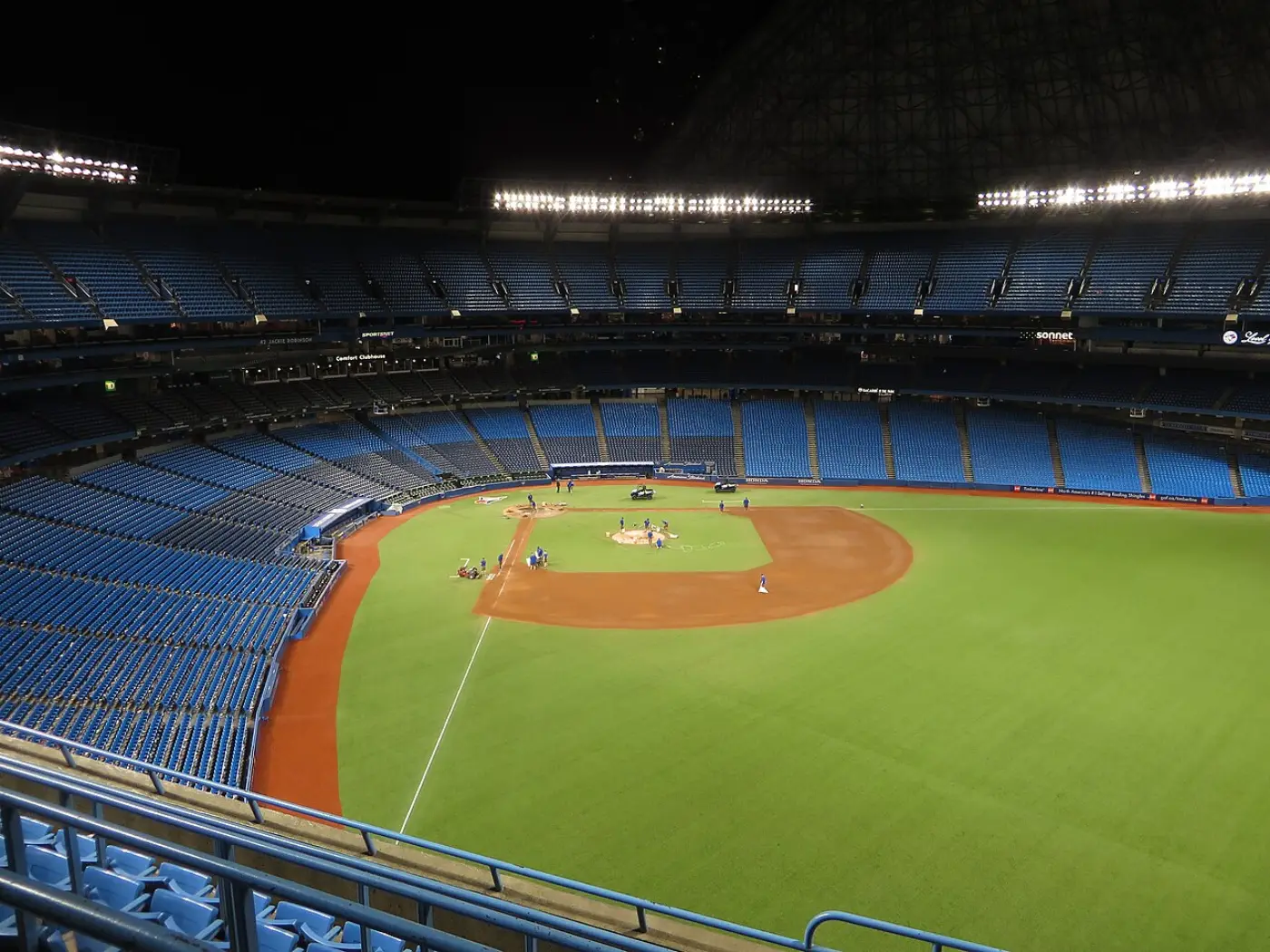
A 99-day lockout and the 1994–95 strike: MLB's two kinds of work stoppage
According to the AP article, MLB's previous negotiations included a 99-day lockout. It ended on March 10, when the two sides agreed to a five-year deal. The article says the deal preserved the full 162-game 2022 season.
The same article says MLB players have been through nine work stoppages. They include a seven-and-a-half-month strike in 1994–95 that defeated a salary cap proposal. The article also notes that MLB, unlike the NFL, NBA and NHL, has never had a salary cap, citing strong opposition from players.
Side by side, the two cases show a different party starting each stoppage. In 1994–95, the players went on strike. In the previous negotiations, the clubs imposed a lockout. So the single phrase "MLB work stoppage" covers two different kinds of industrial action. The two kinds of conduct in the Trade Union Act's definition make this distinction clearer.
Article 46 of the Trade Union Act and Supreme Court ruling 2015Da64469 (2018)
Article 46 of Korea's Trade Union Act sets out the requirements for a lockout. Paragraph 1 states: "An employer may conduct a lockout only after a trade union has commenced industrial action." Under Paragraph 2, an employer conducting a lockout "shall report it in advance to the administrative agency and the Labor Relations Commission, respectively." The current law on the National Law Information Center (law.go.kr) is Act No. 21045. It was partially amended on September 9, 2025, and took effect on March 10, 2026. Check the current wording there again before quoting the provision.
Korea's Supreme Court handed down ruling 2015Da64469 on April 12, 2018. It held that a lockout under Article 46 counts as legitimate industrial action "only if it is reasonable as a defensive means against workers' industrial action." The court refused to recognize the legitimacy of an aggressive lockout that goes beyond a defensive purpose. If a lockout is not legitimate, the employer cannot escape its obligation to pay the affected workers' wages for that period. The court dismissed all of the employer's appeals.
Korea and MLB differ on several points. On timing, a Korean lockout comes only after the union starts industrial action; the AP article says MLB lockouts tend to begin in the offseason. On the issue at stake, MLB's 2026 talks center on a salary cap, while the Korean ruling concerns a lockout's legitimacy and wages. On sources, Korea has statutes and a Supreme Court ruling, while MLB has press reports. For any lockout, then, the first question is which country's rules apply.
| Case or rule | Who takes industrial action | Key points | Source |
|---|---|---|---|
| MLB work stoppage, 1994–95 | Players (strike) | A seven-and-a-half-month strike defeated a salary cap proposal | AP article (published on FOX Sports) |
| MLB's previous negotiations | Clubs (lockout) | Five-year deal reached on March 10 after a 99-day lockout; full 162-game 2022 season preserved | AP article (published on FOX Sports) |
| MLB's 2026 negotiations | Commissioner's office and clubs vs. the players' union | Agreement expires December 1, U.S. time (December 2, Korea time); union opposes the salary cap push; lockout fears reported | Chosun Ilbo report of October 25, 2026; AP article |
| Article 46, Korea's Trade Union Act | Employer (lockout) | Allowed only after the union commences industrial action; must be reported in advance to the administrative agency and the Labor Relations Commission | Statute, National Law Information Center |
| Supreme Court ruling 2015Da64469 (April 12, 2018) | Employer (lockout) | Legitimate only if reasonable as a defensive means; if not legitimate, the employer is not relieved of its obligation to pay wages | Case law, National Law Information Center |
The takeaway
These sources let us sort lockouts by who imposes them, what they respond to and when they happen. In MLB, both club lockouts and player strikes have counted as work stoppages. In Korea, the statute and the court ruling frame a lockout as a defensive measure. The open question is how MLB's negotiations will end in December.
MLB news may keep changing before and after the agreement expires, so when reading related reports, check their publication and update dates first. To learn more about the Korean system, read the current wording of Article 46 alongside the full text of ruling 2015Da64469 on the National Law Information Center. The full ruling also explains where the line falls between defensive and aggressive lockouts.