1. Mudang, Simbang, Noaidi: What to Consider Before Using a Single Word
Lay the world's ritual records side by side and the first thing you notice is that roles that look alike go by different names in different places. In its discussion of the types of mudang (Korean shamans), the Academy of Korean Studies' Encyclopedia of Korean Culture notes that on Jindo Island a mudang is called a danggol. A press release from the Cultural Heritage Administration (now the Korea Heritage Service) explains in an English footnote that simbang is the Jeju dialect word for a shaman. The Library of Congress's law blog introduces the Sámi noaidi as "a spiritual leader similar to a shaman." UNESCO's intangible heritage materials describe Colombia's "jaguar shamans" and Malawi's "Vimbuza healing dance."
Translating all of these names as "shaman" makes comparison easier. But as the Library of Congress's use of the word "similar" suggests, the translated term and the local concept are not necessarily the same. This article therefore keeps the names each source uses. It moves from the two types of Korean mudang to the gut rituals of Jeju and Jindo, the Evenki shaman's drum held by the Russian Museum of Ethnography, the Sámi drum and Colombia's jaguar shamans, and finally Malawi's Vimbuza. It then compares the ritual objects together, and the last section sums up the similarities, the differences and how these traditions are changing today.
2. The Academy of Korean Studies' Classification of Mudang: Gangsinmu, Seseummu and 273 Shamanic Deities
The Academy of Korean Studies' Encyclopedia of Korean Culture divides mudang into two broad types: gangsinmu (降神巫), on whom a spirit has descended, and seseummu (世襲巫), who inherit the role. Its entry on shamanic belief explains that gangsinmu are found in central and northern Korea, while seseummu, who pass the role down through family lines over generations, are found in the south. According to the same entry, the oldest (最古) record of shamanism in Korea dates from the reign of King Namhae, the second ruler of Silla, in the early first century, and the first foreign religion to arrive is known to have been Buddhism, in the late fourth century. Nationwide surveys count 273 shamanic deities (巫神), combining nature deities and deified humans (人神). In shamanic belief, the universe has three layers: heaven, earth and the underworld.
Becoming a gangsinmu is said to begin with sinbyeong (神病), or spirit illness. The encyclopedia says this illness starts as a physical ailment and then turns into a mental one, and that it lasts eight years on average and in some cases as long as 30 years. Learning a mudang's skills takes about three years. During this time the novice takes a teacher mudang as a spirit mother, becoming a spirit daughter if female or a spirit son if male, and so forms a spiritual lineage (神系組織).
This classification shows that there is more than one path to becoming a mudang. One path runs through a long spirit illness and a ritual kinship with a teacher; the other follows a family bloodline. Add the regional split between the central and northern areas and the south, and it becomes hard to picture the mudang in a single way even within one country. These two paths can also serve as a yardstick when reading traditions from other countries.
3. Jeju Keungut, Chilmeoridang Yeongdeunggut and the Danggol of Jindo: Rituals Run by Five or More People for Seven Days to Two Weeks
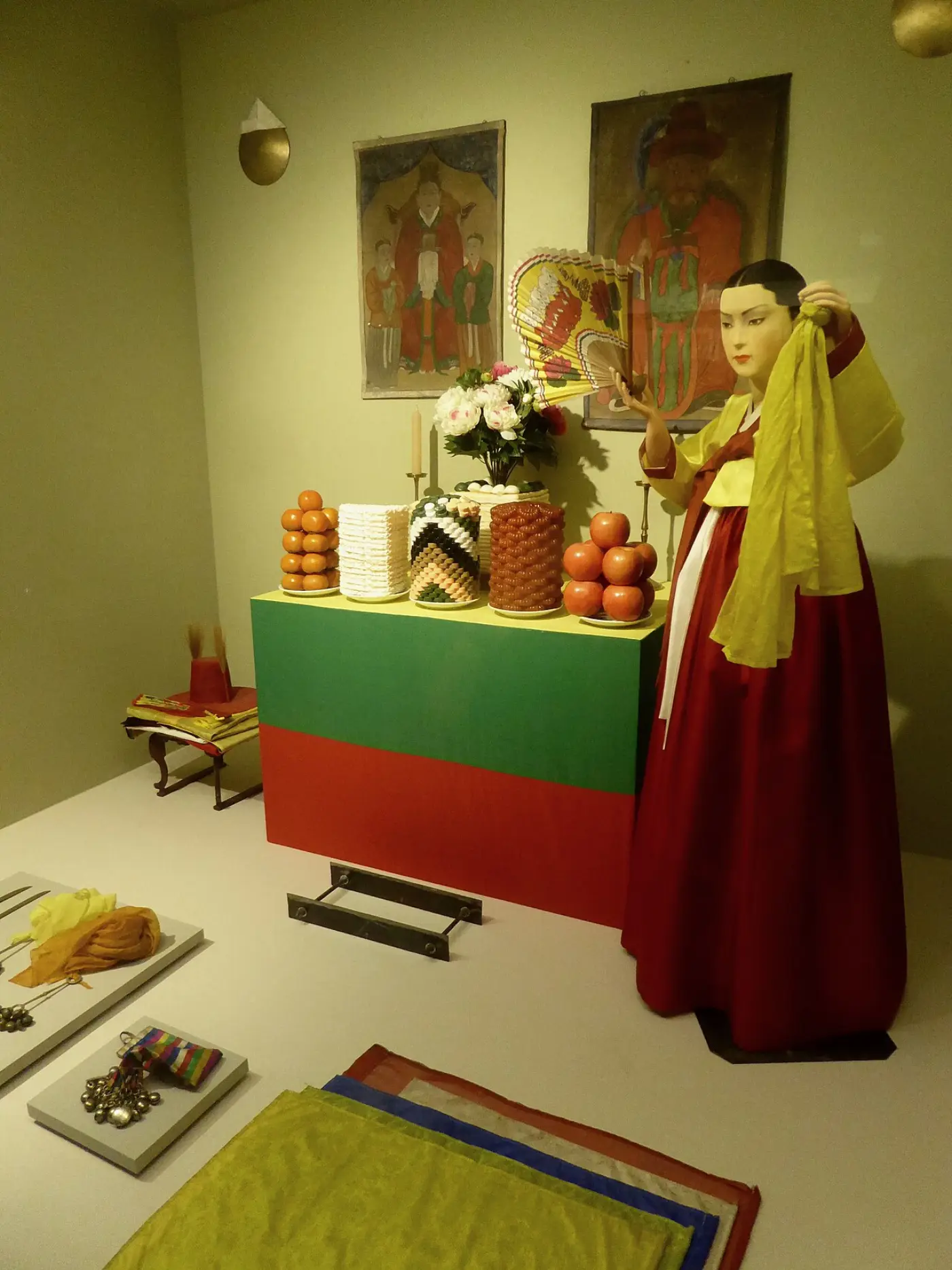
The Cultural Heritage Administration gave advance notice that it would designate Jeju Keungut, the largest shamanic ritual handed down on Jeju Island, as a new National Intangible Cultural Property. According to the press release, the ritual is usually performed by five or more people, including a senior simbang, and lasts at least seven days and up to about two weeks. The administration praised the way Jeju Keungut follows the ritual structure of welcoming the gods (yeongsin), entertaining them (osin) and sending them off (songsin). The same press release explains that the Yeoldu Bonpuri are the stories of the gods' origins that Jeju simbang recite while seated before the ritual table (祭床) during a gut.
UNESCO describes Jeju Chilmeoridang Yeongdeunggut as a ritual held in the second lunar month to pray for calm seas, a plentiful harvest and a good catch. Village shamans perform a series of rites for Yeongdeung Halmang, the goddess of the wind, the Dragon King and the mountain gods. UNESCO notes that besides the shamans, the ritual is supported mainly by women divers (haenyeo) and boat owners, who prepare the food and present the offerings. This passage suggests that the ritual is not the shamans' work alone but something carried out together by people whose lives are tied to the sea.
The Academy of Korean Studies' entry on Jindo Ssitgimgut says that on Jindo a mudang is called a danggol, and that in the past each danggol had a territory called a dangolpan, performing rituals only within it and never entering areas where another danggol worked. According to the same entry, the ritual that prays for the dead to reach paradise and guides their souls onward is called ssitgimgut in Jeolla Province, gwihyangpuri on Jeju Island, ogugut in Gyeongsang Province, jinogwigut in Hwanghae Province, saenamgut in Seoul and darigut in Pyeongan Province. The fact that rituals with the same purpose carry different names in different regions fits with the different titles mudang, simbang and danggol. The records suggest that Korean shamanism is better understood as a collection of regional traditions than as a single, uniform system.
4. The Evenki Shaman's Drum in the Russian Museum of Ethnography: Yenisei District, Late 19th to Early 20th Century
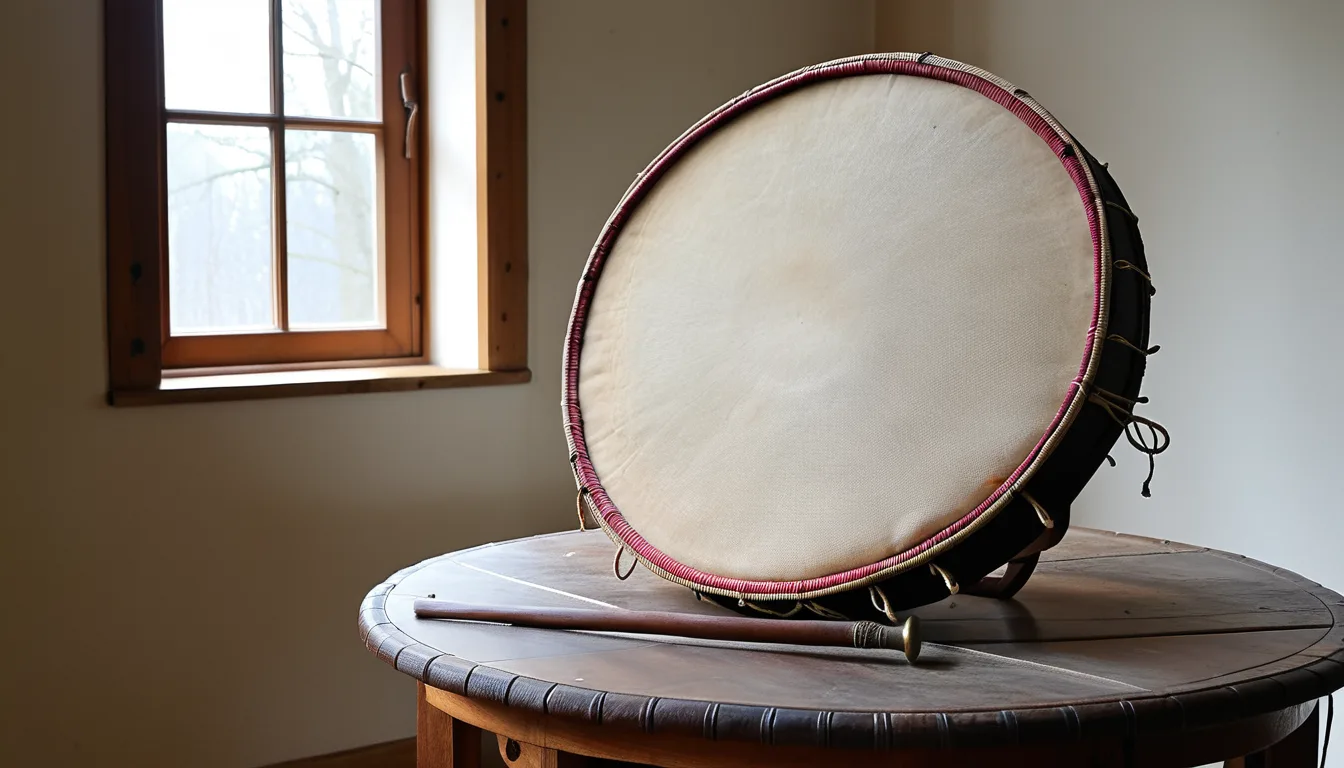
The collection catalog of the Russian Museum of Ethnography lists an Evenki shaman's drum. The catalog gives its origin as the Yenisei district of Yenisei Province. It dates the drum to the late 19th to early 20th century. Its listed materials are sinew cord, larch, iron and brass.
Museum records can be seen as built mainly around where an object came from, when it was made and what it is made of. So when reading such a record, the starting point should be to avoid reading particular symbols or uses into the drum. The combination of wood such as larch with metals such as iron and brass in a single object shows that this ritual instrument was made by bringing together several materials. The Sámi drum in the next section is described as reindeer skin stretched over a wooden frame, and comparing the two records shows that even a "drum" is recorded with different materials from region to region.
5. The Sámi Noaidi's Drum and the 1609 Decree; the Jaguar Shamans of Colombia's Pirá Paraná River
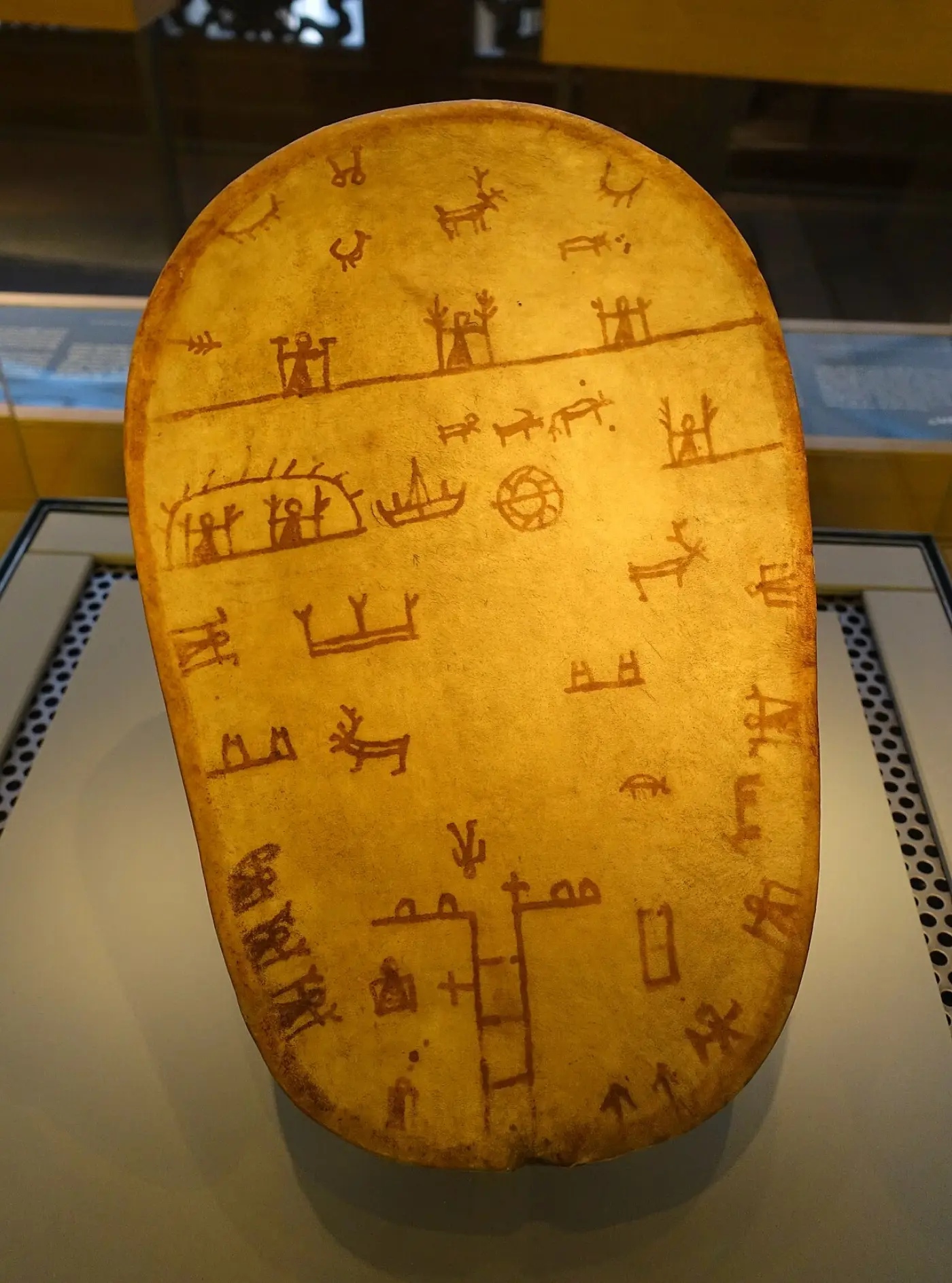
The Library of Congress law blog In Custodia Legis explains that a Sámi drum is made of reindeer skin stretched over a wooden frame. According to the post, the noaidi used the drum to enter a trance, travel to other places, including the world of the dead, and visit the gods. The same post says that in a 1609 decree King Christian IV of Denmark classified the use of Sámi drums as sorcery and made it a crime punishable by death. It is a documented case of a ritual instrument's use being banned by law.
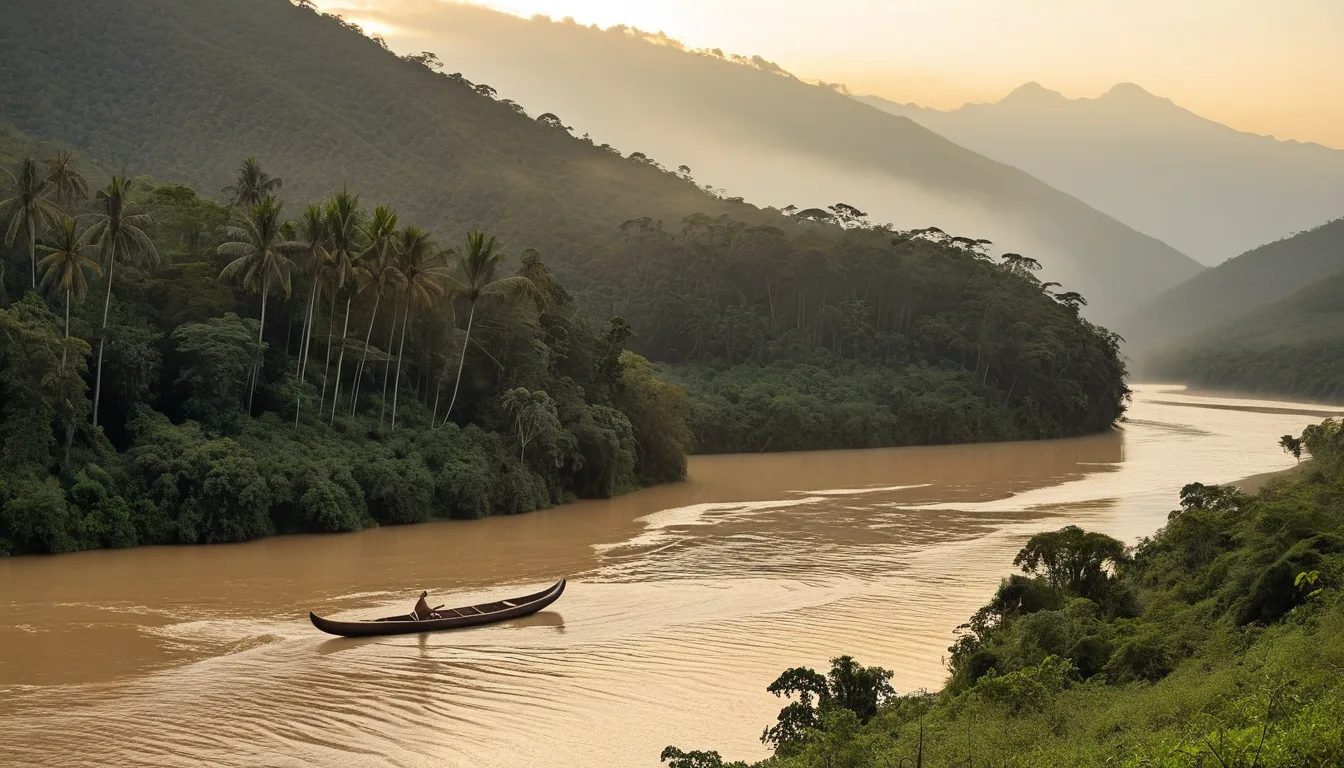
UNESCO presents the traditional knowledge of the jaguar shamans of Yuruparí as the cultural heritage of several ethnic groups living along the Pirá Paraná River in Vaupés, in southeastern Colombia. The jaguar shamans follow a ritual calendar based on sacred traditional knowledge, whose aims are described as bringing the community together, healing, preventing illness and renewing nature. In one of these rituals, the Hee Biki, traditional guidelines for protecting the health of people and territory are said to be passed on to boys as part of their passage into adulthood. What stands out in this description is that the health being cared for includes not only people but also territory and nature.
Read side by side, the account of the Sámi drum emphasizes the noaidi's "travel" to other worlds, while the account of the jaguar shamans emphasizes the ritual calendar and transmission between generations. Like the spirit mother and spirit daughter relationship in Korea, the Hee Biki ritual shows knowledge passing to the next generation through set relationships and procedures. The 1609 decree, meanwhile, shows that the same ritual instrument could be defined in entirely different terms under an outside legal authority. The way a ritual's status depends on the institutions that view it is taken up again in the final section.
6. The Vimbuza Healing Dance of Malawi's Tumbuka People, Proclaimed by UNESCO in 2005
According to UNESCO, Vimbuza is a healing dance widespread among the Tumbuka people of northern Malawi. UNESCO describes it as an important manifestation of ng'oma, a healing tradition found throughout Bantu-speaking Africa. It also notes that by being possessed by vimbuza spirits, people could express mental distress in a way that the society around them could accept and understand. The dance was proclaimed in 2005 and later inscribed on the Representative List of the Intangible Cultural Heritage of Humanity.
UNESCO's description does not claim that Vimbuza's "healing" is a medical effect. Instead, it can be read as presenting the dance as a social mechanism that translates one person's suffering into terms the community can understand. Seen this way, a healing tradition is understood through a person's relationship with the community rather than through an individual's power. Set beside the Korean account of a gangsinmu's spirit illness moving from a physical to a mental ailment, both traditions interpret physical and mental hardship through a relationship with spiritual beings. The difference is that the Korean sources describe spirit illness as part of becoming a mudang, while the Vimbuza sources describe spirit possession as a way of expressing suffering.
7. Bells, Myeongdu, Drums and Trumpets: From 12 to 20 Shaman Costumes to the Pointer on a Sámi Drum
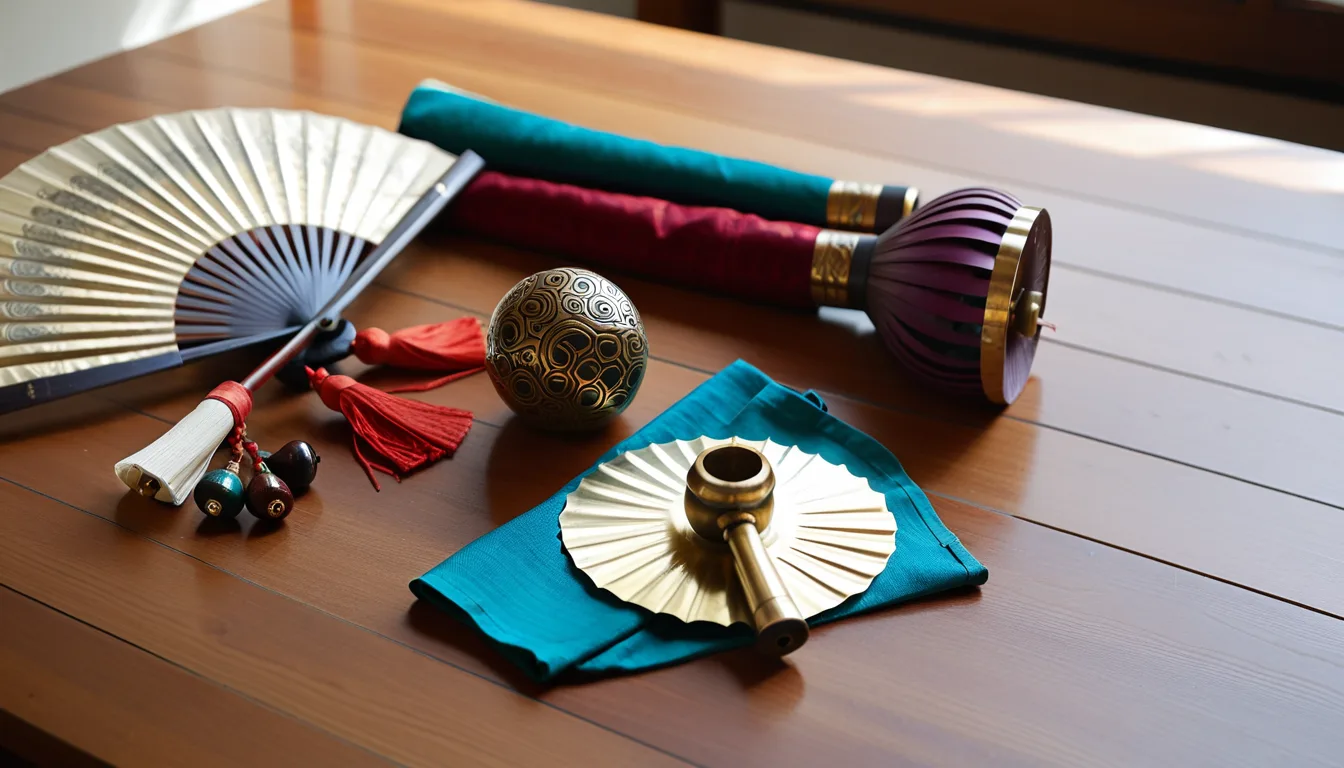
The Academy of Korean Studies' entry on shamanic implements divides ritual tools into four groups: musical instruments such as the janggu drum, jing gong and jegeum cymbals; blades such as the spirit knife and the jakdu straw-cutter blade; divination tools such as old coins (yeopjeon) and santong divination tubes; and small props such as bells, paper money, fans and five-colored flags. Bells are spirit-calling tools that the mudang holds and shakes to make a sound when inviting the gods, while the fan is used when dancing, when bestowing blessings on people and in gestures that act out the gods' majesty. The myeongdu of the Yeongdong region is a brass disc 3 mm thick, polished like a mirror on its convex outer side, with the sun, the moon and the Big Dipper set on its concave inner side. Jeju's mengdu are brass knives with paper tassels; two are laid on the ground at the same time and fortunes are read from where the blades come to rest. In Hwanghae Province, a female shaman wears a mask called a gwangdae on her head during the daedonggut and baeyeonsingut rituals, and because a gangsinmu has a separate costume symbolizing the individual god of each stage of the ritual, the costumes usually number 12 to 20.
Instrumentation also varies from ritual to ritual. Jindo Ssitgimgut uses the janggu, jing, buk drum, piri oboe, jeotdae flute, haegeum fiddle, ajaeng zither and gayageum zither, among others. The Library of Congress blog explains that the pictures painted on the reindeer skin of a Sámi drum symbolized the world the Sámi lived in, and that the noaidi placed a pointer on the drum and foretold the future by watching how it moved. UNESCO writes that the jaguar shamans' life energy and knowledge are believed to be inherited from Yuruparí, a mythical anaconda who lived as a human, and that they reside in sacred trumpets made from palm wood. The only men who take part in Malawi's Vimbuza ritual are those who play the drum rhythms specific to each spirit and, in some cases, male healers.
Gathered in a table, the ritual objects can be seen to fall into roles: tools that make sound, tools for divination, and tools believed to hold gods or knowledge. The Sámi drum is described as a tool for trance and divination, and Jeju's mengdu is shaped like a knife but used for divination. This means the Academy of Korean Studies' categories may not fit tools from other regions exactly. Compared with a museum item recorded mainly by origin, materials and date, like the Evenki drum above, it becomes clear that what we can learn about even the same kind of drum depends on the nature of the source.
| Region / tradition | Representative ritual object | Features and uses described in the sources |
|---|---|---|
| Korean shamanism (Academy of Korean Studies) | Bells, fan | Bells are spirit-calling tools shaken to make a sound when inviting the gods; the fan is used in dance and in gestures that act out the gods' majesty |
| Yeongdong region / Jeju Island | Myeongdu / mengdu | The myeongdu is a brass disc with the sun, the moon and the Big Dipper set on its inner side; the mengdu is a brass knife with paper tassels, laid on the ground for divination |
| Hwanghae Province | Gwangdae (mask) | Worn on the head by a female shaman during the daedonggut and baeyeonsingut rituals |
| Evenki (Russian Museum of Ethnography collection) | Shaman's drum | From the Yenisei district of Yenisei Province; late 19th to early 20th century; sinew cord, larch, iron and brass |
| Sámi | Sámi drum | Reindeer skin on a wooden frame; the pictures symbolize the world the Sámi lived in; the noaidi is said to have foretold the future from a pointer's movements |
| Pirá Paraná River basin, Colombia | Sacred palm-wood trumpets | Believed to hold the shamans' life energy and knowledge, said to be inherited from Yuruparí |
8. Similarities, Differences and the Present: From Jindo Ssitgimgut's 1980 Designation to 71 Sámi Drums
First, the traditions covered here can be read as overlapping in that they are rituals for building relationships with spiritual beings. Korean gangsinmu perform rituals in a state in which a god has descended on them, the Sámi noaidi travels to other worlds by means of the drum, and Vimbuza participants are described as being possessed by spirits. The purpose of these rituals also goes beyond the individual. Yeongdeunggut is carried out together with women divers and boat owners to pray for calm seas and a good catch, and the jaguar shamans' ritual calendar aims to bring the community together and renew nature. Another striking common feature is that drums or drum rhythms appear throughout the Korean, Evenki, Sámi and Malawian sources.
Second, there are clear differences in how people meet the gods and how traditions are passed on. The Academy of Korean Studies explains that when a gangsinmu performs a gut, the god descends and the mudang and god become one, whereas a seseummu acts as a priest praying to the god, so that god and mudang stand apart as two. In ritual music, too, gangsinmu rely mainly on percussion, while seseummu add string instruments to percussion. The routes of transmission also split: through spirit illness, through family lines, or, as in the Hee Biki ritual, through knowledge passed to boys as they come of age. Grouping the gangsinmu on whom a god descends, the noaidi described as traveling to other worlds, and the spirit-possessed Vimbuza dancers under one word can hide these differences.
Third, these traditions are finding new places today within intangible heritage systems and museums. Jindo Ssitgimgut was designated a National Intangible Cultural Property (now National Intangible Heritage) in 1980, and UNESCO has inscribed both Jeju Chilmeoridang Yeongdeunggut and the traditional knowledge of the jaguar shamans of Yuruparí on the Representative List of the Intangible Cultural Heritage of Humanity. Vimbuza was proclaimed in 2005 and inscribed on the Representative List in 2008, but UNESCO notes that while the dance is still performed in the rural areas where the Tumbuka live, it continues to face suppression by Christian churches and modern medicine. Seventy-one Sámi drums are known to survive today, held in museums in Sápmi, Norway, Sweden, Finland and elsewhere in Europe, and the Danish government transferred legal ownership of one of them from the National Museum of Denmark to the Sámi museum in Karasjok, Norway. The Library of Congress blog explains that Sámi drums are rarely used for entering trances today but often appear in cultural and political settings as an important symbol of the Sámi people. Since the same ritual instrument has passed through prohibition, preservation, repatriation and symbolism, shamanic traditions can be seen as cultures whose meanings are still changing.
Related reading: Yulgok Yi I: The Man Said to Have Topped Joseon's Civil Service Exams Nine Times · Pansori (Korean Epic Chant) vs Western Classical Singing: Voice and Performance